Where Are Honeybees Taken After Relocation in Gilbertsville PA?
From your home's walls directly to our registered private apiaries.
The Short Answer
After safe extraction in Gilbertsville, PA, relocated honeybees are transported to our private, registered apiary yards in Montgomery and Berks Counties. They are installed in standard Langstroth hives alongside their original brood comb, provided with supplemental sugar syrup to rebuild their wax combs, and monitored for overall colony health in accordance with the Pennsylvania Department of Agriculture standards.
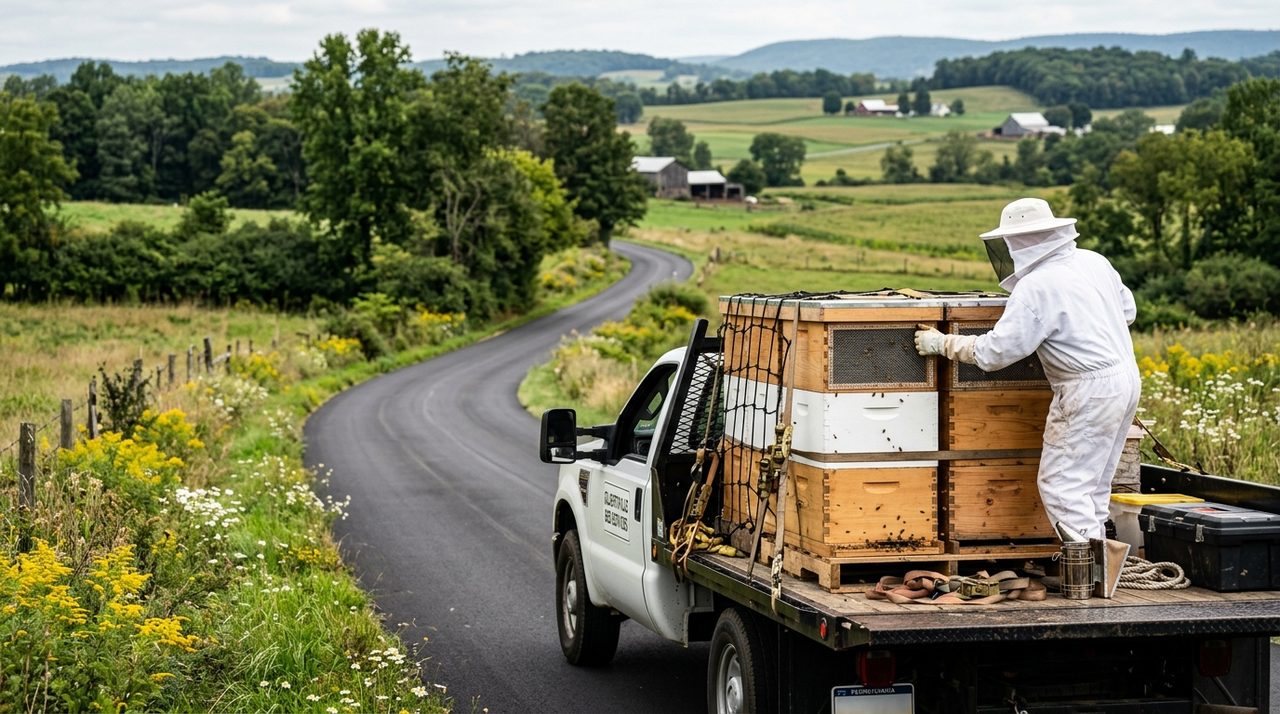
When a honeybee colony is safely extracted from a home or business in the Gilbertsville area, the rescued bees are transported directly to our managed, private apiaries in Montgomery and Berks Counties, where they are carefully transitioned into new hive boxes to recover and thrive. As registered beekeepers with the Pennsylvania Department of Agriculture, we prioritize restoring these essential pollinators to a secure, rural environment rather than exterminating them. At Honeybee Rescue Company, we manage every step of the relocation process ourselves to give the colonies we save a strong chance at survival in their new homes.
The Structural Assessment and Low-Pressure Extraction Process
Before we can relocate a colony, we must safely extract them from your property. Honeybees often seek out dry, protected voids inside residential structures, such as wall cavities, soffit lines, and space beneath roof shingles. To pinpoint the exact location of the hive without causing unnecessary damage, we perform a detailed initial assessment. Specialized tools, including thermal imaging cameras, are often used to detect the heat signature produced by the cluster of bees. This allows us to map out the physical boundary of the hive before we ever make a cut in your drywall or siding.
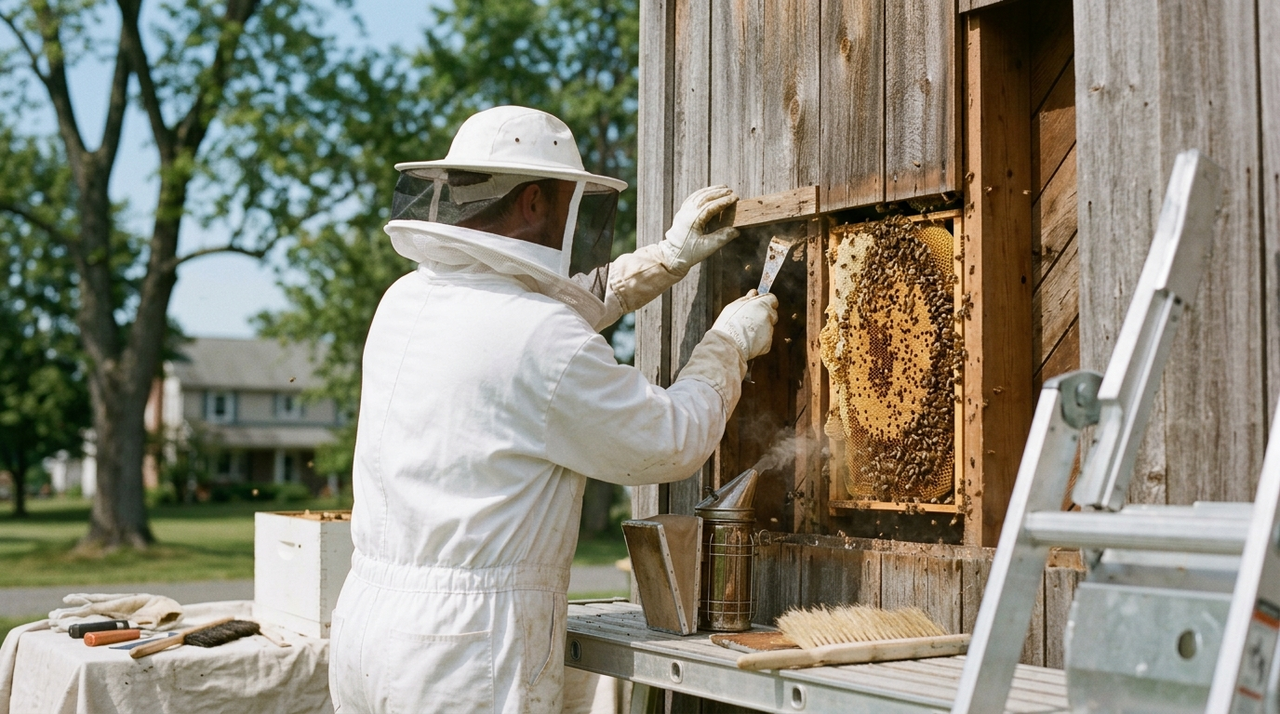
Once we identify the nest boundary, we carefully open the structure to perform what beekeepers call a structural "cut-out." During this process, a specialized, low-pressure bee vacuum is typically used. Standard household vacuums injure or kill the bees due to high velocity and hard impacts. A specialized bee vacuum gently pulls worker bees into a padded, ventilated catch chamber, which can help keep the bees safe during the extraction. While we are vacuuming the adult bees, the wax combs containing the developing bee larvae, known as the brood, are typically cut down carefully to preserve the future generations of the colony.
Safely Transporting Rescued Colonies Through Southeastern Pennsylvania
Transporting tens of thousands of stressed honeybees through the changing weather of Montgomery County requires careful preparation and speed. Honeybees are highly sensitive to temperature and airflow. During the hot, humid summer months in Gilbertsville, a confined colony can quickly overheat. When bees become stressed, they rapidly fan their wings and generate extreme body heat. If a transport container lacks adequate ventilation, this heat can build up within minutes, causing the bees to suffocate or melt their own fragile wax combs.
To prevent transport losses, specialized, highly ventilated transport boxes are typically used. These boxes feature heavy mesh screening that allows fresh air to circulate constantly around the bees while keeping them safely contained inside our transport vehicle. Conversely, if we are performing an extraction on a cool spring morning, steps are typically taken to insulate the sensitive brood comb from cold drafts, which can kill developing larvae. Once the colony, including the queen, is safely loaded, we transport them directly to our private apiary yards. Minimizing their time in transit is an effective way to support a successful relocation.
Setting Up the Bees in Our Montgomery and Berks County Apiaries
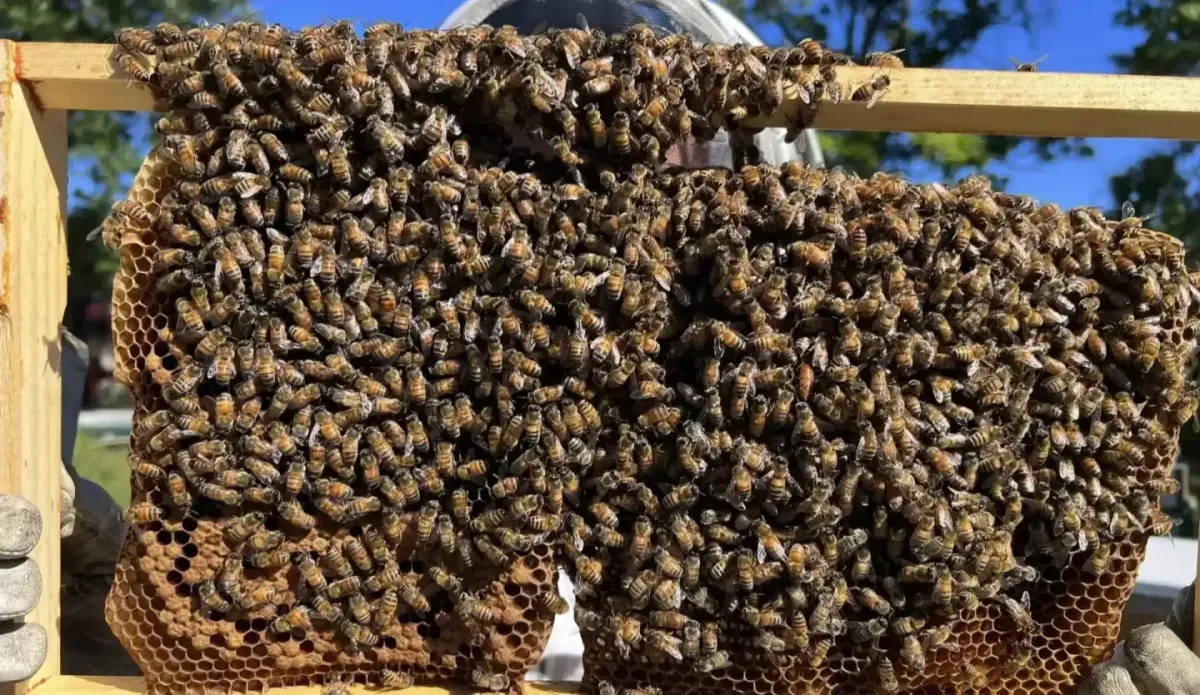
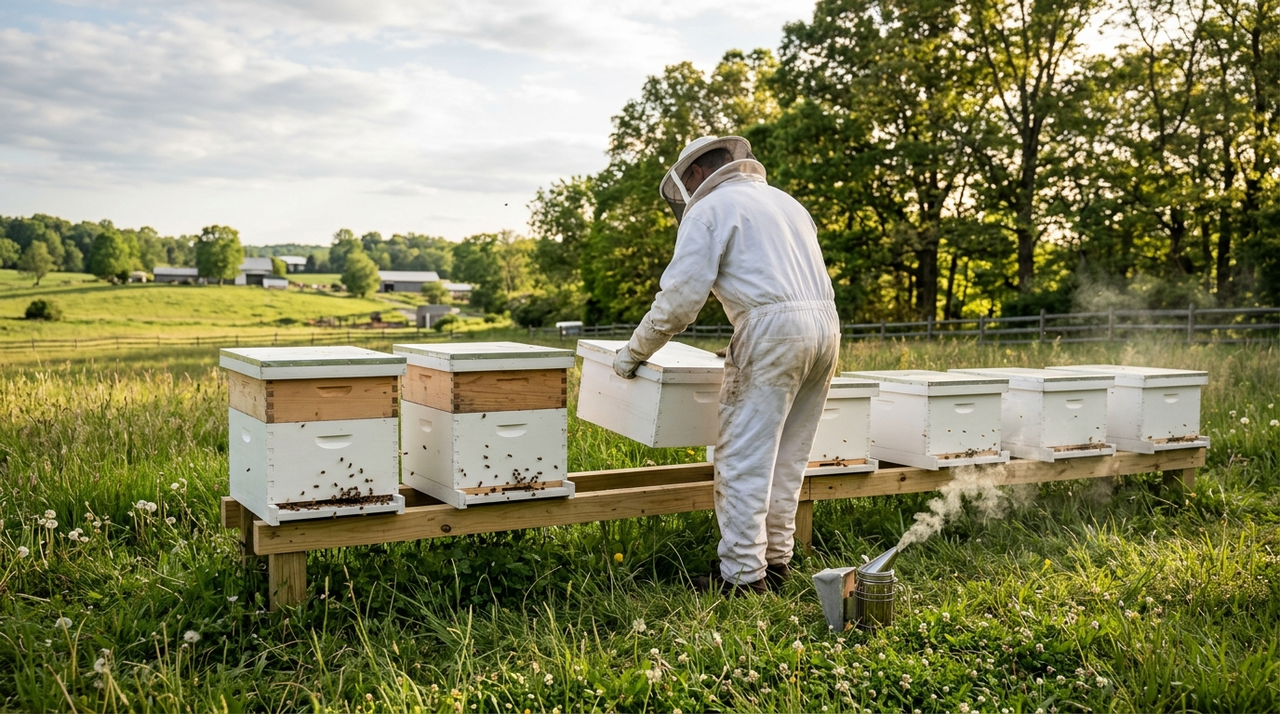
When we arrive at our private apiary yards, the real rehabilitation work begins. We do not simply release the bees into the wild or pass them off to other operators. Instead, rescued bees are typically installed into clean, standardized Langstroth hive boxes in managed yards; these boxes utilize movable wooden frames, which let us monitor the health and progress of the colony without disrupting their natural behaviors.
The transition process starts with the brood comb we saved during the extraction. Natural wax combs are often mounted into wooden frames using temporary rubber bands. The bees will eventually secure the comb to the wooden frame using propolis, a natural sticky tree resin they collect, and chew away the rubber bands once they are no longer needed. Placing their original brood comb into the new hive box is essential because it contains their developing young and the familiar scents of their original home. This familiarity immediately settles the worker bees and helps them adapt to their new surroundings.
If we successfully captured the queen during the structural removal, the queen can be kept in a temporary queen cage inside the new hive box for the first few days. Worker bees can feed and interact with her through the wire mesh, but she cannot fly away. Keeping the queen secured prevents the worker bees from absconding. If a relocated colony does not feel secure in its new box, the bees may swarm and leave the apiary entirely. Once the workers have begun building fresh wax comb and cleaning out the hive, the queen is safely released to resume her normal egg-laying duties.
Understanding Pennsylvania's Bee Law and Apiary Regulations
Beekeeping is a regulated agricultural practice in Pennsylvania, designed to protect both hobbyists and commercial growers. According to the Pennsylvania Department of Agriculture, the Pennsylvania Bee Law of 1994 requires all beekeepers to register their apiary locations — though requirements vary by municipality, so confirm with your local building department. This system allows the state to track the health of honeybees and efficiently respond to potential disease outbreaks. Our operations are fully registered under license PA#105107, ensuring that every colony we rescue is managed in complete compliance with state agricultural standards.
A key focus of these state regulations is the prevention of highly infectious diseases, particularly American Foulbrood (AFB). AFB is a bacterial pathogen that destroys developing bee larvae and can easily decimate whole apiaries if left unchecked. Spores from infected hives can be carried by foraging bees to neighboring colonies, creating a widespread local biosecurity issue. Seasonal state inspectors regularly examine registered apiary yards between mid-March and October to certify colony health. By keeping our apiaries registered and strictly adhering to these rules, we ensure that the bees we relocate do not introduce pathogens to the local beekeeping community.
To support the health of bees across our state, we work closely with guidelines provided by the Pennsylvania State Beekeepers Association, which assists the state department of agriculture in educating the public and promoting sustainable hive management. Our compliance with these standards ensures your bee issue is resolved responsibly and legally.
Rehabilitation, Feeding, and Preparing for Local Winters
A relocated colony is essentially starting over with nothing. They have lost their protective wall cavity, their cured honey reserves, and their honeycomb. Rebuilding a hive from scratch is an incredibly resource-intensive process. Honeybees must consume approximately eight pounds of honey to produce just one single pound of beeswax. Because a newly relocated hive has no stored food, they cannot survive without immediate human assistance and intervention.
To help them rebuild quickly, newly relocated bees are often fed a clean, supplemental sugar syrup. In the spring and early summer, we use a light, one-to-one mixture of sugar and water, which mimics natural floral nectar. This stimulates the worker bees to rapidly draw out new wax comb so the queen has a place to lay eggs. In the late summer and fall, we switch to a thicker, two-to-one syrup mixture, which requires less evaporation work from the bees and allows them to quickly store winter food reserves.
Preparing for a typical Southeastern Pennsylvania winter is a major focus of our late-season management. In Gilbertsville, winters are cold and windy, and a colony must have at least 60 to 80 pounds of stored honey to survive the freezing months. If we perform a live bee relocation service in Gilbertsville late in the season, the bees will not have enough time to forage for wild nectar. In these situations, we feed them heavily or combine weaker colonies to ensure they have the population size and food reserves required to stay warm. Winter management typically includes installing entrance reducers to block cold winds, mouse guards to keep nesting rodents from damaging the combs, and specialized insulation wraps to protect the hives during deep freezes.
Why Live Relocation Is Safer for Your Gilbertsville Home
Some property owners face an active bee infestation and immediately consider using chemical sprays or calling a traditional pest control service to exterminate the colony. While this may seem like an easy fix, extermination actually causes severe, costly structural damage to your home. When a live honeybee colony is active inside a wall, the bees constantly fan their wings to regulate the temperature inside the cavity, keeping the wax from melting. If you exterminate the bees, this active climate control stops immediately.
Without the bees to cool the nest, the ambient heat inside your wall cavity will cause the wax combs to soften and melt. Once the wax fails, pounds of raw honey will seep into your insulation, drywall, and framing. This sticky mess will eventually stain your interior walls, ruin your plaster, and attract secondary pests, including mice, ants, and wax moths. Furthermore, the rotting brood and melting honey will create a persistent, foul odor and can foster toxic mold growth. Ultimately, the only way to resolve a melted hive is to tear open the wall, remove the contaminated building materials, and rebuild, resulting in thousands of dollars in restoration costs. Investing in a professional humane live bee removal is the only way to avoid these severe structural consequences.
Full-Service Damage Repair and Property Restoration
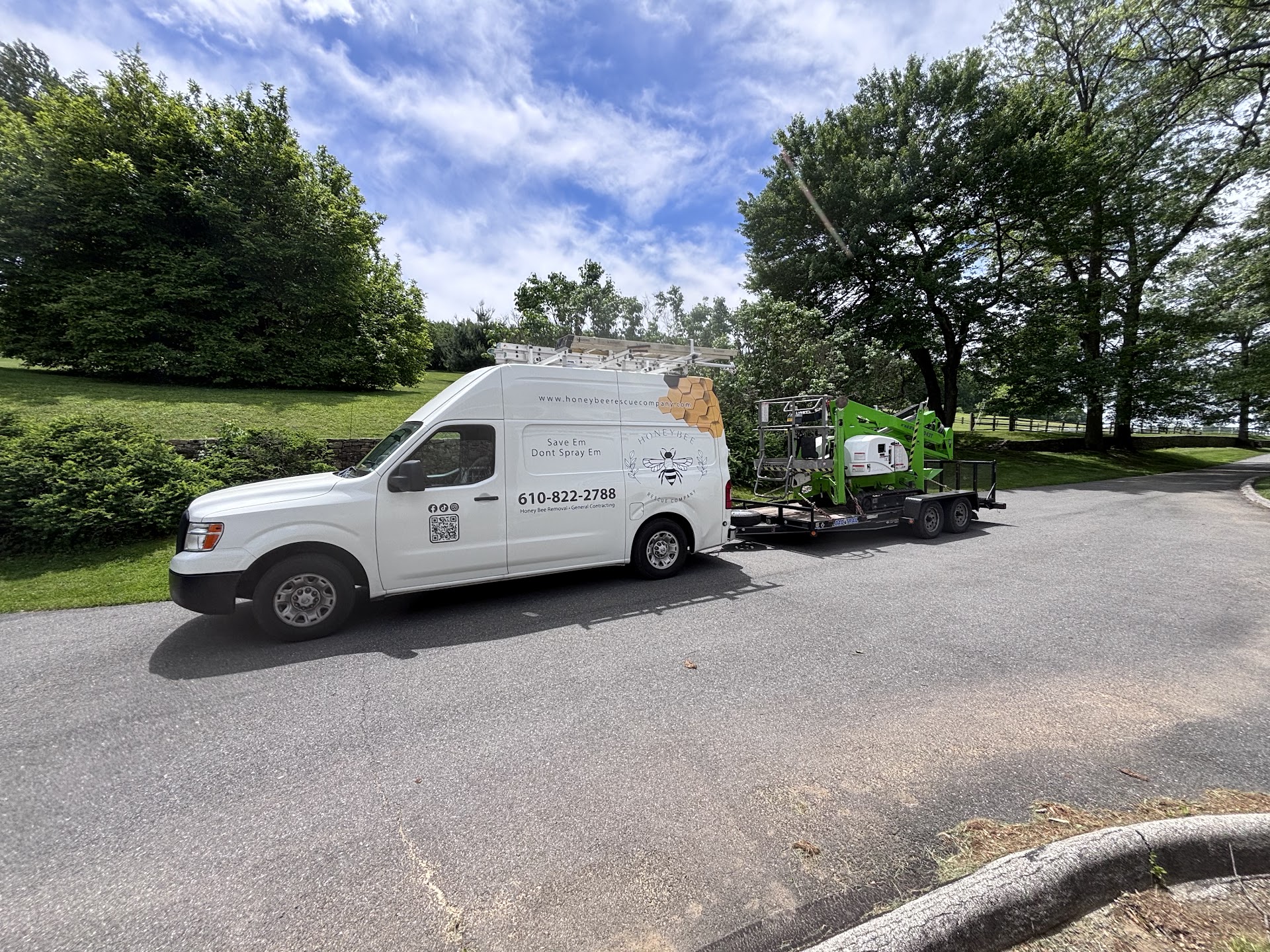
Performing a proper structural bee relocation requires physical access to the interior of your home's walls or ceilings. Many bee removal companies will extract the bees but leave the open hole in your siding, ceiling, or drywall for you to repair on your own. This leaves your home exposed to the elements and other pests. Our company takes a different approach to customer service. Because Honeybee Rescue Company is a DBA of TDK Contracting LLC, we carry the proper general contracting licenses to completely repair and restore any damage caused during the extraction process.
Once the honeybees, combs, and honey residues are entirely removed, the internal wood framing is typically scraped and sanitized. A specialized odor-blocking sealant is often applied to mask any lingering pheromones, which prevents future bee swarms from being attracted to the same spot. After sealing the cavity, the opened area is reconstructed, replacing the drywall, siding, or soffit material to match the home's original aesthetic. This unified approach saves you from the hassle of hiring and coordinating separate tradespeople to patch up your property.
Protecting Your Property with Professional Care
Attempting to remove a mature honeybee colony on your own is dangerous. A typical colony nesting inside a wall contains 20,000 to 50,000 defensive bees. Without proper protective gear and experience, a DIY attempt can result in severe stings. Our co-owners, Ty Kelius and Alyssa Kelius, have ten years of hands-on experience in safe bee handling and home restoration, providing a reliable solution for your home.
We approach every removal with a deep respect for both the insects and your property. As a local, family-owned business, we care about preserving the local agricultural ecosystem in Montgomery and Berks Counties while ensuring your family is safe from stinging hazards. If you have noticed bees entering a small hole in your siding or fascia boards, please reach out to our team to schedule an inspection. Our thorough assessment and reconstruction services ensure that your bee problem is solved permanently, safely, and humanely.
Get a Professional Assessment Today
Protecting your home and the environment starts with an expert inspection. At Honeybee Rescue Company, we do not provide free services, but we do offer on-site inspections and estimates to give you an accurate, itemized plan for your specific structural situation. To schedule an assessment with our experienced team, please visit our estimate request form and share the details of your bee issue. We will help you safely relocate the bees to our private apiary and restore your Gilbertsville home to pristine condition.
Common Questions
Frequently Asked Questions
Ready To Start?
Get Your Quote Today
Get a quote from Honeybee Rescue Company — serving Gilbertsville and surrounding areas.