When to Call for Emergency Bee Removal in Gilbertsville, PA
Recognizing when stinging insects threaten your household safety and how live extraction protects your home.
The Short Answer
Call for emergency bee removal immediately if bees are entering your living spaces, nesting near entryways or walkways, or posing an imminent risk to anyone with stinging insect allergies. Urgent extraction is also necessary if a heavy colony threatens structural ceilings or walls. In non-threatening outdoor spots, a resting swarm often moves on within a day, but structural intrusions require prompt professional intervention.
You step onto your porch on a humid June afternoon in Gilbertsville, only to find a cloud of thousands of buzzing insects darkening the air near your roofline. Moments like that trigger immediate panic, leaving homeowners stuck between wanting to protect their family and hesitating because honeybees are ecologically valuable. Knowing whether you are facing a fleeting outdoor rest stop or a critical hazard inside your house determines your next move.
The Gilbertsville Homeowner Dilemma: Swarm Versus Established Colony
During late spring and early summer across Montgomery County, honeybee colonies reach their population peaks. When a hive outgrows its space, the old queen departs with roughly half the worker bees to establish a new home. This phenomenon is swarming. A swarm on the move looks terrifying because twenty thousand flying insects can create a deafening buzz. Yet, swarming bees are generally at their most docile because they are engorged on honey reserves and have no nursery comb or brood to defend.
Problems escalate when scout bees find an opening in your exterior siding, soffit, or chimney brickwork. Honeybees are cavity nesters seeking dark, dry spaces that offer roughly ten gallons of internal volume. If a cluster hangs quietly on a branch fifteen feet up in an apple tree, it is likely resting while scouts search the area. In that situation, patience usually pays off, as the cluster often departs within twenty-four to forty-eight hours on its own. However, if those same bees are steadily streaming into a knot hole or weep vent on your house, they have stopped resting and started building. That is the exact point where standard monitoring ends and urgent intervention becomes necessary.

Five Critical Situations That Require Immediate Emergency Removal
Not every bee sighting demands a late-night phone call, but certain warning signs mean you cannot afford to wait. Postponing action during a true emergency risks physical injury, structural contamination, and extensive repair bills later on.
1. Bees Entering Living Spaces Through Vents, Fixtures, or Drywall
If you see bees crawling around interior windowpanes, slipping past recessed ceiling canisters, or buzzing around baseboards, the barrier between the wall cavity and your living quarters has failed. Honeybees do not understand interior floor plans. Once inside a wall void, they follow warmth and indoor light leaks. A nest inside a bedroom or hallway wall poses an active danger to anyone walking past, especially in the dark. In these circumstances, homeowners should seek specialized emergency bee removal in the Gilbertsville area before hundreds of disoriented workers find their way into living areas.
2. Documented Stinging Insect Allergies in the Household
According to medical health data, severe allergic reactions to insect venom (anaphylaxis) can turn life-threatening in minutes. If an occupant, immediate neighbor, or pet has a known sting allergy, a bee colony nesting near an entrance, patio, or driveway represents an unacceptable safety threat. When an allergic individual cannot safely enter or exit their own home, waiting several days for a routine consultation is out of the question.
3. Primary Walkways and Entryways Blocked by Aggressive Flight Paths
Honeybees establish a flight corridor extending several yards from their nest entrance. If a colony selects a wall void right next to your front door, mail drop, or garage opening, normal daily routines suddenly intersect their flight path. While bees rarely attack unprovoked while foraging, guarding workers vigorously defend the nest against vibrations, sudden movement, and perceived threats. A colony that prevents postal workers, utility technicians, or family members from safely reaching the doorway requires rapid removal.
4. Structural Strain and the Threat of Honey Leaks
An established colony does not merely occupy empty space. Over a few weeks, workers build substantial wax comb and fill it with brood and nectar. A mature nest can hold fifty to one hundred pounds of honey and wax. During hot southeastern Pennsylvania summer spells, unconditioned attic and wall spaces can heat up rapidly. Without live bees actively fanning the comb to regulate temperature, the wax melts. Melted honey ferments, soaks through structural drywall, rots wall studs, and attracts secondary vermin. If you notice honey weeping through ceiling plaster or sweet-smelling sticky spots running down baseboards, the structural integrity of your wall is already compromised.
5. Defensive Aggression During Late-Season Nectar Dearths
In August and September, floral nectar becomes scarce across eastern Pennsylvania. Beekeepers refer to this as a nectar dearth. During this period, worker bees become hyper-protective of their accumulated winter stores. Any accidental disruption, such as a lawnmower vibrating against the exterior wall or children playing ball nearby, can provoke a swift, aggressive defensive response from thousands of guards.
The Hidden Trap of DIY Spraying and Sealing
When panic strikes, the instinctive homeowner response is often to grab an aerosol can of pesticide or a tube of expanding foam sealant. In the pest management trade, this is known as the fastest way to turn an inconvenient problem into a costly disaster.
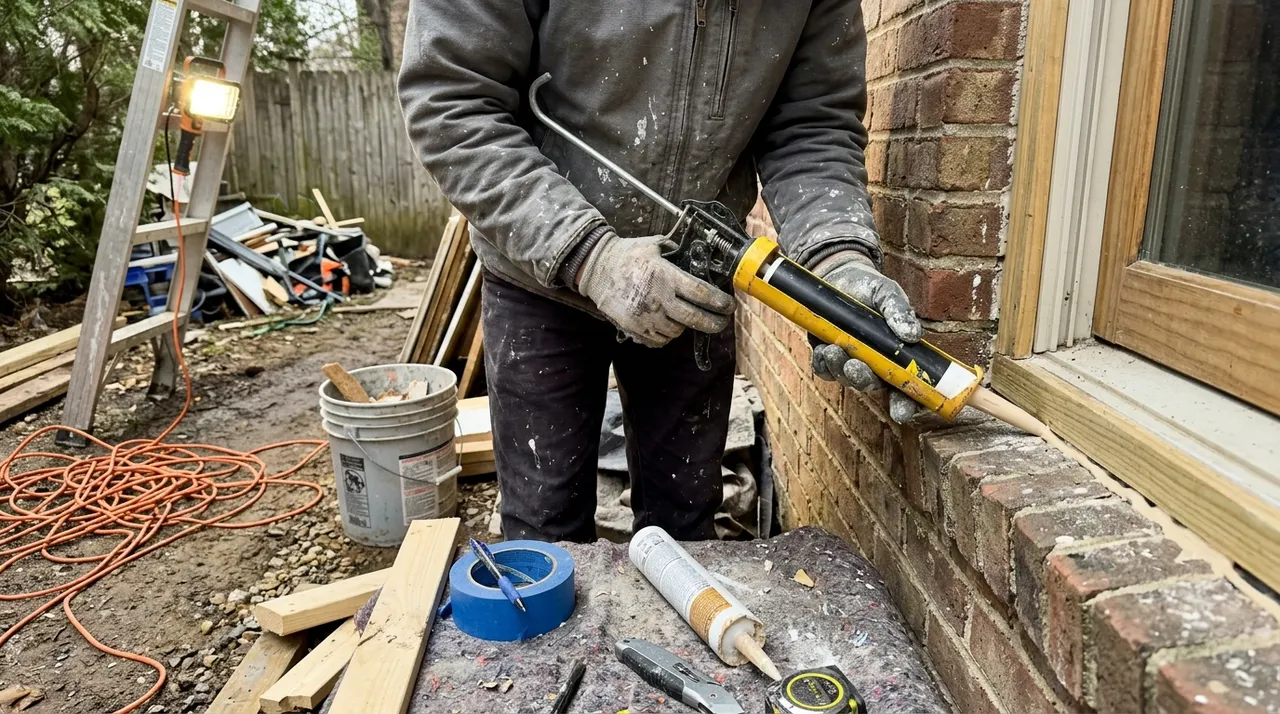
If you caulk or foam shut the external hole where bees enter, the thousands of insects already inside the cavity will not simply perish quietly. Blocked from their primary exit, they search frantically for secondary openings. Within hours, they follow air currents around electrical outlets, light switches, heating ducts, and trim moldings, emerging inside your living room by the hundreds. Trapping bees inside guarantees they end up in your living space.
Spraying chemical insecticides directly into the hole causes equal devastation. Even if the spray manages to kill the insects, it leaves behind an abandoned biohazard. Dozens of pounds of untreated honey, dead bee larvae, and raw wax will remain sealed inside your wall. Without worker bees maintaining the climate, the comb breaks down, rotting inside your home and causing foul odors that linger for months. Furthermore, abandoned honey draws yellow jackets, carpenter ants, mice, and carpet beetles. As emphasized in the Penn State Extension pollinator guidance, proper stinging insect management requires understanding insect nesting behavior and implementing physical removal rather than indiscriminately applying chemical treatments to structural cavities.
Distinguishing Honeybees from Wasps and Hornets
Before dispatching an emergency crew to your Gilbertsville property, identifying whether you are dealing with honeybees or another stinging species helps ensure the right equipment is brought to the job site. Homeowners frequently confuse honeybees with yellow jackets because both can nest in wall voids.
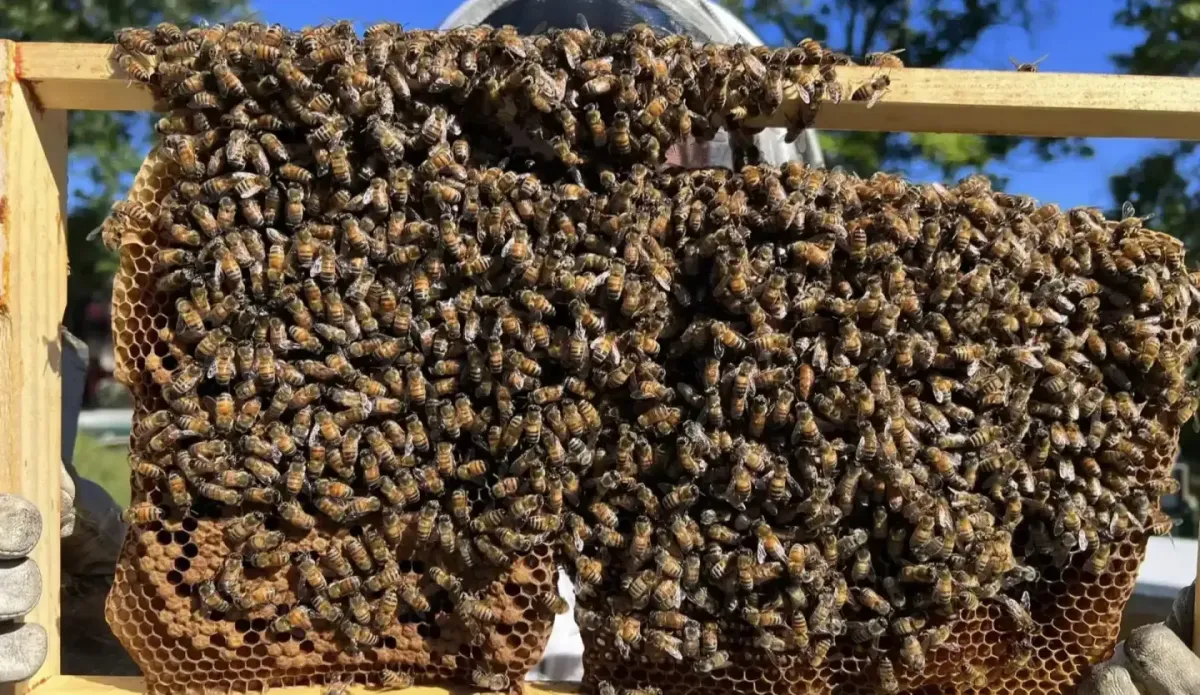
- Honeybees: Golden-brown to charcoal in appearance, covered in fine hair, with visible pollen baskets on their hind legs. They build geometric wax honeycomb and are generally defensive only when their hive or flight path is disturbed.
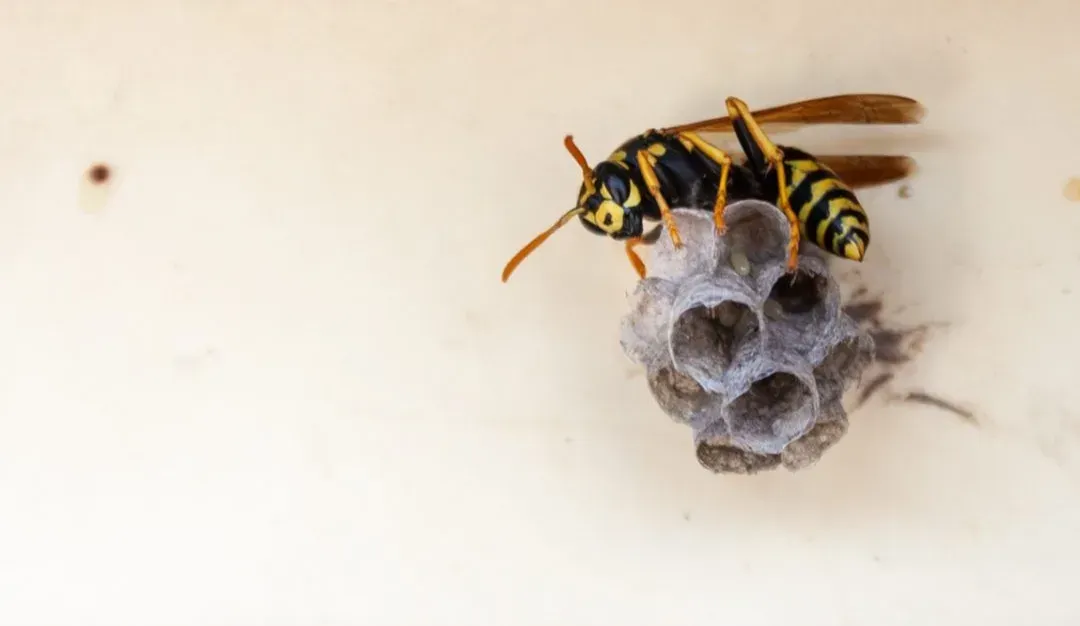
- Yellow Jackets: Hairless, sleek, bright black and yellow bodies with an erratic flying pattern. They construct papery gray carton nests and are notoriously aggressive, particularly around picnics and trash cans in late summer. They can sting repeatedly without losing their stingers.
- Bald-Faced Hornets: Large, robust, black bodies with ivory-white markings on the face and abdomen. They construct large, football-shaped paper nests suspended high in trees, under eaves, or beneath deck railings.
- Bumblebees: Large, very fuzzy bees with rounded abdomens that often build small colonies in ground burrows, compost heaps, or low insulation voids.
If your unwanted guests are honeybees, eradication should never be the primary goal. Whenever safe and structurally feasible, opting for a humane bee relocation service in Gilbertsville preserves essential pollinators while permanently resolving the intrusion in your home.
What a Professional Structural Cut-Out Entails
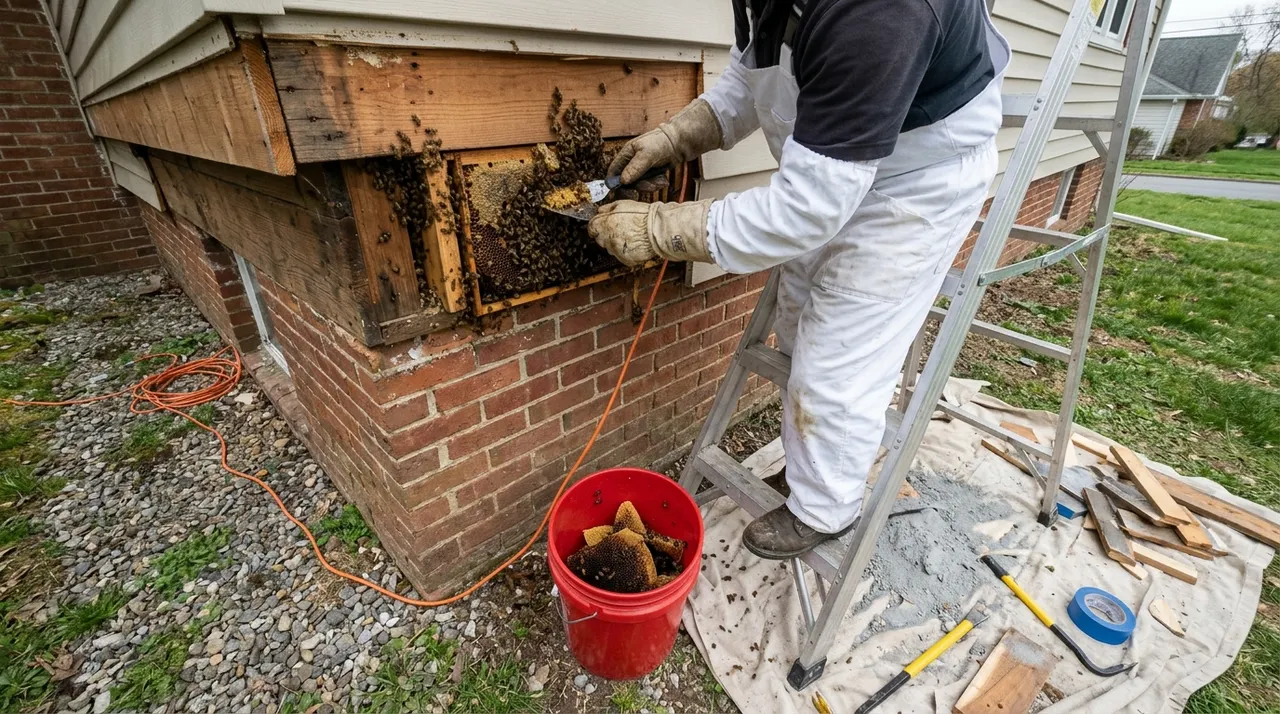
Handling a bee emergency inside a structure requires construction know-how paired with specialized apicultural skills. A complete cut-out process follows methodical stages to ensure bees are saved and your home is protected:
- Precision Detection: Rather than blindly tearing open siding or drywall, professional technicians locate the exact perimeter of the nest using thermal sensing tools, acoustic listening devices, or non-invasive moisture meters.
- Gentle Bee Extraction: Using specialized low-pressure vacuum capture systems fitted with ventilated holding boxes, the adult workforce and queen are gathered without harm.
- Full Comb and Brood Removal: Every ounce of wax comb, honey, and developing brood must be physically cut out of the wall framing. Leaving behind even a few inches of comb invites future swarms, as wax pheromones remain detectable to passing scouts for years.
- Sanitization and Deodorization: The exposed wall cavity is scraped clean, washed with enzymatic cleaners to eliminate residual scent markings, and treated to prevent fungal growth.
- Exclusion and Insulation: The void is repacked with proper insulation and sealed at all exterior joints using metal mesh and durable sealants before any structural finishes are restored.
Understanding the Variables Behind Bee Removal Costs
One of the most common questions homeowners ask is what removal will cost. Because every home construction style is different, honest bee removal professionals do not quote flat rates over the phone without assessing the property first. Several physical variables dictate the complexity and cost of the work:
- Location and Elevation: A swarm on a low porch railing requires minimal staging, while a colony tucked beneath a third-story roof peak requires scaffolding or aerial ladders.
- Hive Age and Colony Size: A newly arrived swarm that landed three hours ago contains no comb and can often be vacuumed into a transport box in under an hour. A hive that has lived inside a wall for three seasons may contain sixty pounds of honey spread across four stud bays.
- Building Materials: Accessing a cavity behind vinyl siding is straightforward to open and re-hang. Conversely, removing comb from behind exterior stone veneer, brick, or historic lath-and-plaster requires specialized masonry techniques.
- Carpentry and Repair Requirements: Some homeowners prefer handling their own finish carpentry, while others need a complete turnkey solution that includes drywall repair, exterior cladding restoration, and weatherproofing.
Your actual project cost depends entirely on your specific property architecture, hive dimensions, and accessibility. Scheduling an on-site evaluation and inspection is the only dependable way to receive an accurate quote.
Steps to Take While Waiting for Help to Arrive
Once you identify an emergency situation and contact a professional, keep your household safe during the waiting period by following these practical safety rules:
- Keep all children and household pets indoors, away from windows adjacent to the hive entrance.
- Turn off outdoor lighting near the entrance if the issue occurs near dusk. Disoriented bees are attracted to bright white lights and will cluster near screen doors.
- Never throw objects at the hive, spray water from a garden hose, or attempt to strike the cluster with brooms. Physical agitation triggers alarm pheromones that mobilize guards.
- Do not operate loud power equipment such as lawnmowers, leaf blowers, or string trimmers within fifty feet of the hive, as small engine vibrations agitate the colony.
- If bees have made their way into a specific room, close interior doors to contain them, turn off the lights in that room, and place a rolled towel along the bottom door gap to prevent them from slipping into hallways.
Trusting Local Beekeeping Specialists for Urgent Calls
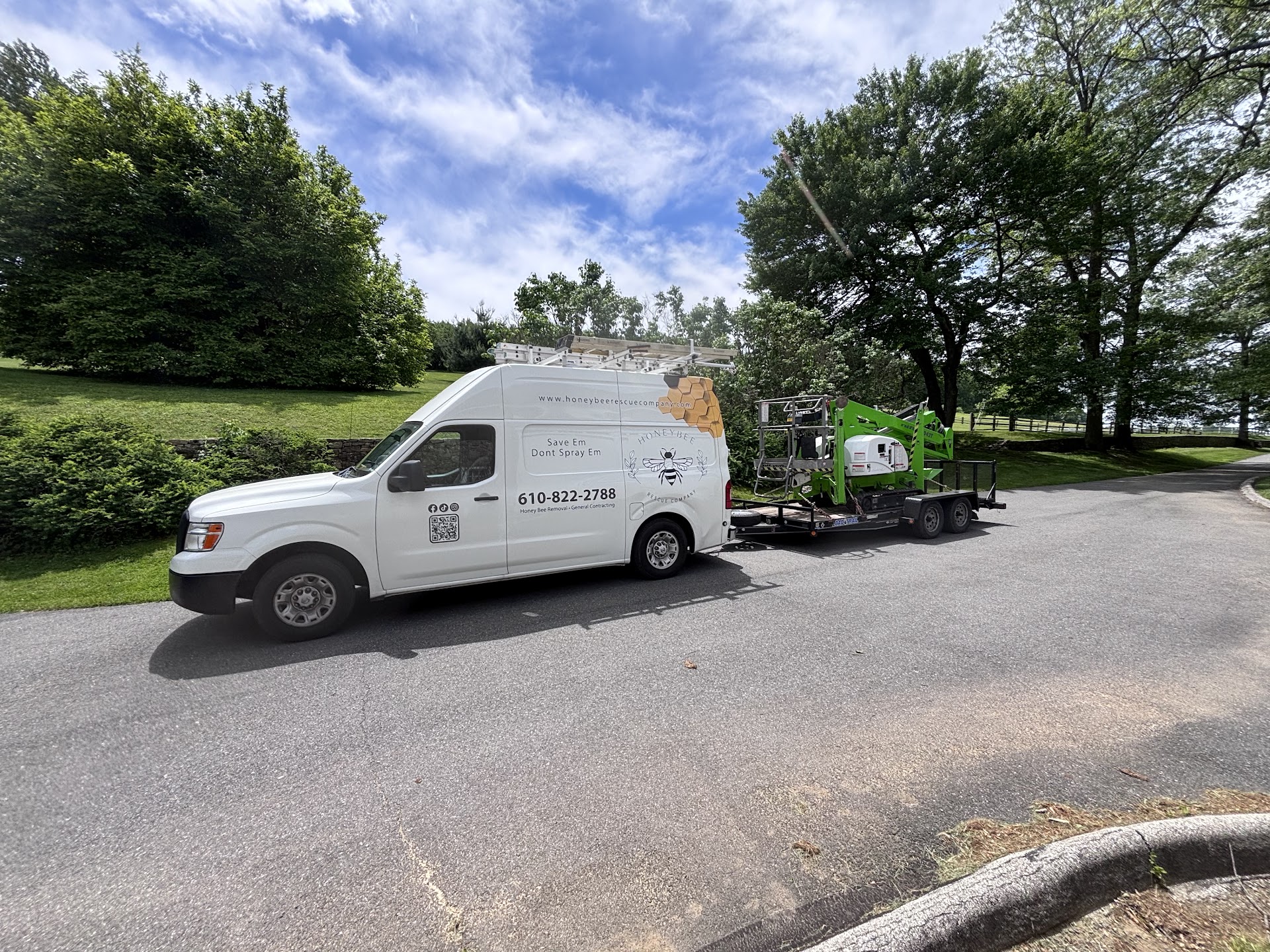
Dealing with stinging insects in your structure requires a team that respects your home as much as the pollinators themselves. At Honeybee Rescue Company, co-owners Ty Kelius and Alyssa Kelius bring 10 years in business to every project across Montgomery County and neighboring communities. Operating under contractor license PA#105107, we are family owned and operated, fully licensed, insured, bonded, GreenPro Certified, QualityPro Certified, and a Termidor Certified Professional.
We believe extermination should never be the answer for honeybees. By pairing beekeeping knowledge with full-service structural cut-out capabilities, we extract colonies cleanly, relocate the bees to our private apiaries, and ensure your building is securely repaired and sealed against future pests. When stinging insects threaten your peace of mind or property in Gilbertsville, visit our contact page or call our team directly to schedule a thorough on-site inspection and quote.
Common Questions
Frequently Asked Questions
Ready To Start?
Get Your Quote Today
Get a quote from Honeybee Rescue Company — serving Gilbertsville and surrounding areas.