What to Do If a Bee Swarm Lands on Your House in Gilbertsville PA
A practical safety and removal guide for Gilbertsville homeowners facing a sudden honeybee cluster.
The Short Answer
If a bee swarm settles on your house, stay calm and keep family and pets indoors. Swarming honeybees are resting while scout bees search for a permanent cavity. Never spray them with water or pesticides, which provokes defensive stinging and drives them into wall gaps. Contact an experienced local beekeeper promptly to inspect the cluster and relocate the bees before they migrate into your home structure.
Stepping outside on a warm spring afternoon in Gilbertsville to find thousands of honeybees swirling around your gutters or clinging to your exterior siding can be alarming. The loud hum and dense cloud of flying insects catch most homeowners completely off guard. While a dark, writhing ball of ten to twenty thousand bees looks like an immediate threat, understanding what is happening biologically changes how you should react. Mishandling this brief window of time, whether by reaching for an insect spray or blasting the cluster with a garden hose, frequently turns a harmless temporary resting spot into a costly structural problem behind your drywall.
Honeybees do not swarm out of anger. Swarming is simply the natural method honeybee colonies use to reproduce and relieve overcrowding in their original hive. During late spring and early summer across Montgomery County, healthy colonies build up massive populations. When the hive becomes too crowded, the old queen and roughly half of the worker bees leave to find a new residence. Before departing, the worker bees gorge themselves on stored honey to fuel their flight and provide energy to draw out fresh wax comb once they find a suitable nesting spot.
Why Honeybees Swarm and Land on Houses
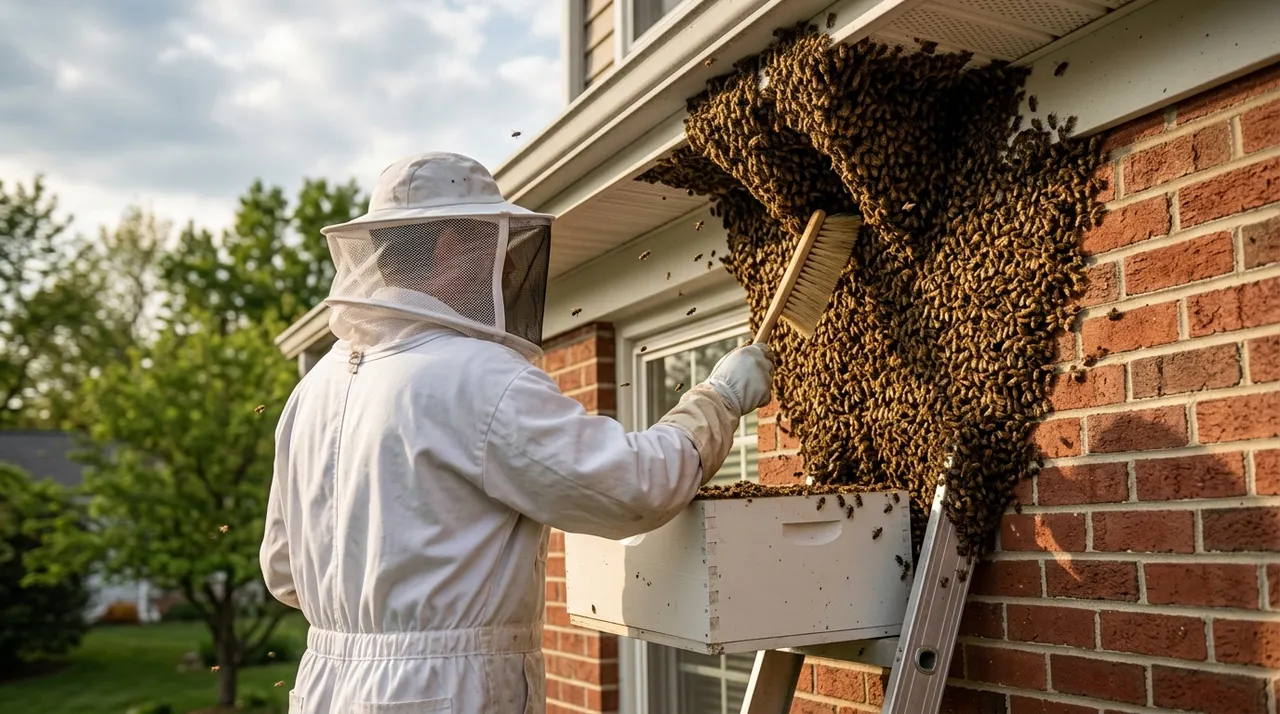
When bees swarm, their flight range is limited. The queen is heavy with eggs, and the workers are weighed down with honey. The swarm often flies a relatively short distance before stopping to rest in an interim cluster. While they commonly gather on tree limbs or fence posts, they just as frequently settle against the corner of a porch roof, a brick chimney, window trim, or vinyl siding.
While the mass of bees stays clustered in a tight, protective ball around the queen to regulate her temperature, scout bees radiate outward in all directions. These scouts search the surrounding neighborhood for an ideal permanent nesting site. According to the Penn State Extension research on honey bee swarms, swarms are generally gentle because they have no brood, honeycomb, or food stores to defend. However, their presence on your exterior wall means your house is being actively scouted as a prospective permanent home.
The First 30 Minutes: Immediate Steps to Take
If you discover a bee swarm attached to your house in Gilbertsville, your first priority is managing the immediate environment rather than confronting the insects. Following a few practical steps keeps everyone safe while preventing the bees from getting startled.
First, bring children and pets inside immediately. While swarming bees are docile compared to bees defending an established nest, loud noises, sudden vibrations, or an inquisitive dog snapping at low-flying scouts can provoke a defensive sting response. Close nearby exterior windows and doors, especially second-story windows near the roofline. If your house has window air conditioners, turn them off temporarily to prevent bees from getting pulled inward through the vent slats.
Second, step back to a safe vantage point roughly twenty to thirty feet away and evaluate the cluster. Take note of its exact location, approximate size, and height from the ground. Is it roughly the size of a softball, a football, or a basketball? Is it resting on an open surface like cedar shakes or brick, or are bees disappearing beneath an overhang, soffit return, or fascia board? Taking a quick, clear photograph with your phone from this distance gives an expert beekeeper valuable context before arriving at your property.

Four Costly Mistakes Homeowners Make with Swarms
When confronted by thousands of buzzing insects against their siding, many homeowners act out of fear or panic. Unfortunately, common DIY reactions almost always make the problem worse and significantly increase the expense of repairs.
1. Spraying the swarm with a garden hose: Blasting a resting cluster with pressurized water knocks bees to the ground, soaks their wings, and chills them. Instead of driving them away, water separates workers from the queen, scatters angry bees across your lawn, and forces disoriented survivors to seek refuge under your siding gaps.
2. Applying over-the-counter wasp or hornet spray: Chemical sprays sold at hardware stores trigger an immediate panic response. Worker bees release an alarm pheromone that smells faintly of bananas, alerting the entire swarm to defend the colony. Beyond the stinging risk, sprays rarely penetrate deep into a large ball of bees. You end up killing a small exterior layer while chemical residue contaminates your building materials.
3. Sealing exterior openings while bees are present: If you notice bees hovering around an entry hole near your soffit, never caulk, tape, or foam that opening shut. Sealing an active entrance traps scout bees and returning workers outside, causing them to swarm aggressively around the hole. Worse, if part of the colony is already inside, trapping them forces the bees to chew through interior drywall or find paths into your living rooms through recessed light fixtures and baseboards.
4. Waiting several days hoping they will simply vanish: While some swarms relocate within twenty-four hours once scouts find a hollow tree, waiting is a massive gamble. In suburban neighborhoods, hollow trees are scarce, making your wall voids, attic spaces, and porch overhangs prime real estate. If the swarm decides your wall cavity is their best option, a quick exterior rescue turns into an invasive structural cut-out.
Swarm vs. Established Hive: Spotting the Difference
Distinguishing between a newly arrived swarm and an established colony inside your structure is essential for choosing the right response. Time is the deciding factor in how bees behave on your home exterior.
A true swarm looks like an exposed, beard-like ball of bees resting directly on an exterior surface. You will see a tight cluster with thousands of individuals clinging to one another, with a few dozen bees flying around the perimeter. There is no visible comb, and the cluster was not there yesterday.
In contrast, an established colony is usually concealed within a wall cavity, soffit, or floor joist. Instead of a resting ball, you will observe continuous, purposeful flight traffic in and out of a specific hole, seam, or crack. Worker bees return with bright yellow or orange pollen pellets packed onto their hind legs. If you place your ear gently against the interior drywall near the entry point, you may hear a persistent, low vibration. Once bees establish comb inside, they will not leave voluntarily, which is why calling for emergency bee removal in Gilbertsville before they move indoors saves thousands in structural carpentry.
What Happens If the Swarm Moves Behind Your Siding
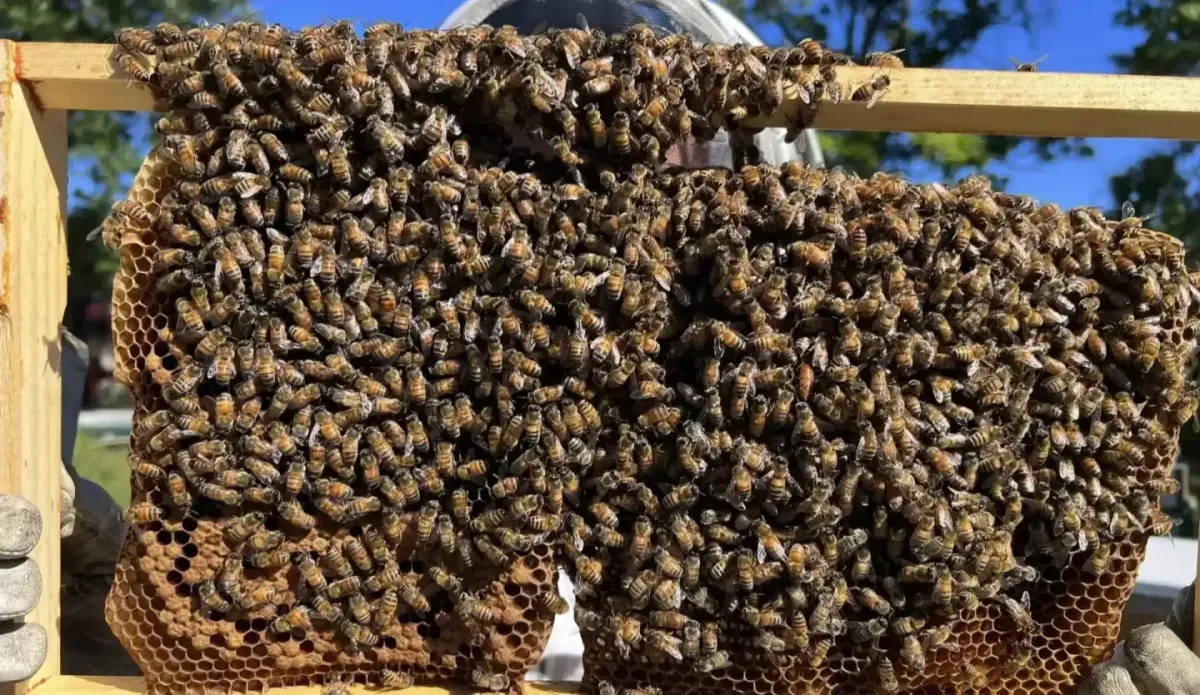
When scout bees select a cavity in your house, the entire swarm can move inside the wall void in less than an hour. Once inside, worker bees immediately begin secreting beeswax and constructing vertical combs. Within forty-eight to seventy-two hours, the queen begins laying thousands of eggs, and foragers begin depositing nectar and pollen.
This biological activity creates severe structural risks for your home. A mature hive can hold thirty to eighty pounds of honey, wax, and developing brood within a few months. During hot Pennsylvania summers, bees actively fan their wings to cool the hive. If the colony dies or is sprayed with pesticide, that cooling stops immediately. Unregulated summer heat causes the beeswax to melt, releasing gallons of honey and fermenting brood fluid down your wall studs. Honey saturates insulation, rots structural framing, stains drywall, and leaks through ceilings.
Residual honey and pheromones also attract secondary pests. Mice, rats, wax moth larvae, and ants follow the sweet scent into your home framing. Residual honey odors also act as a natural beacon for future bee swarms for years unless the old comb is physically removed and the area is sanitized and sealed.
How Professional Live Relocation Protects Your Home
Standard pest control companies often spray honeybees with insecticides, leaving rotting comb and toxic residues entombed inside your building structure. Proper remediation requires beekeeping expertise combined with construction knowledge.
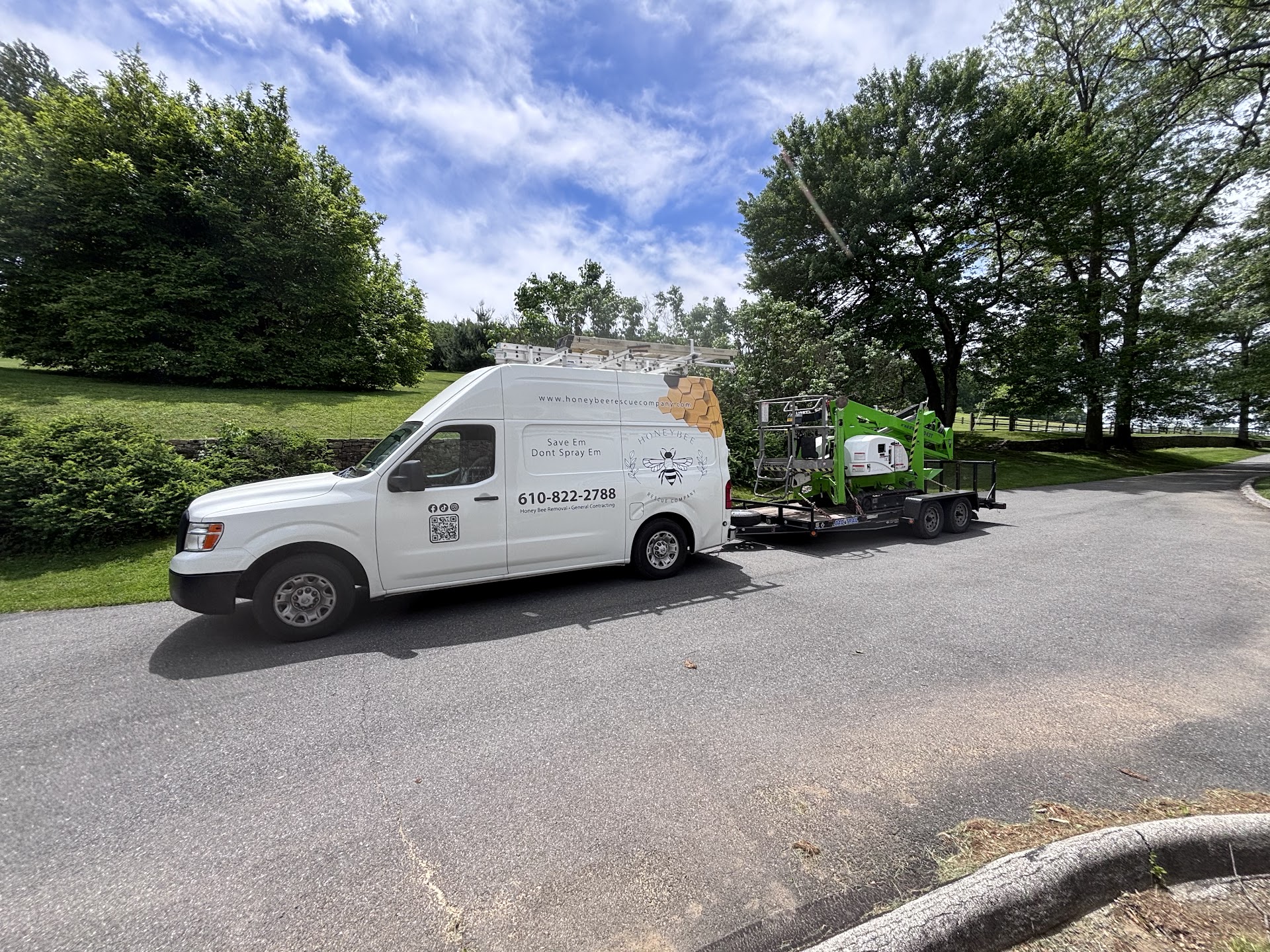
Honeybee Rescue Company is a family-owned operation built around humane, sustainable conservation. Serving Gilbertsville and surrounding communities, we handle bee situations using specialized live-capture methods. Our team is fully licensed and insured, operating under PA#105107, and holds GreenPro and QualityPro certifications.
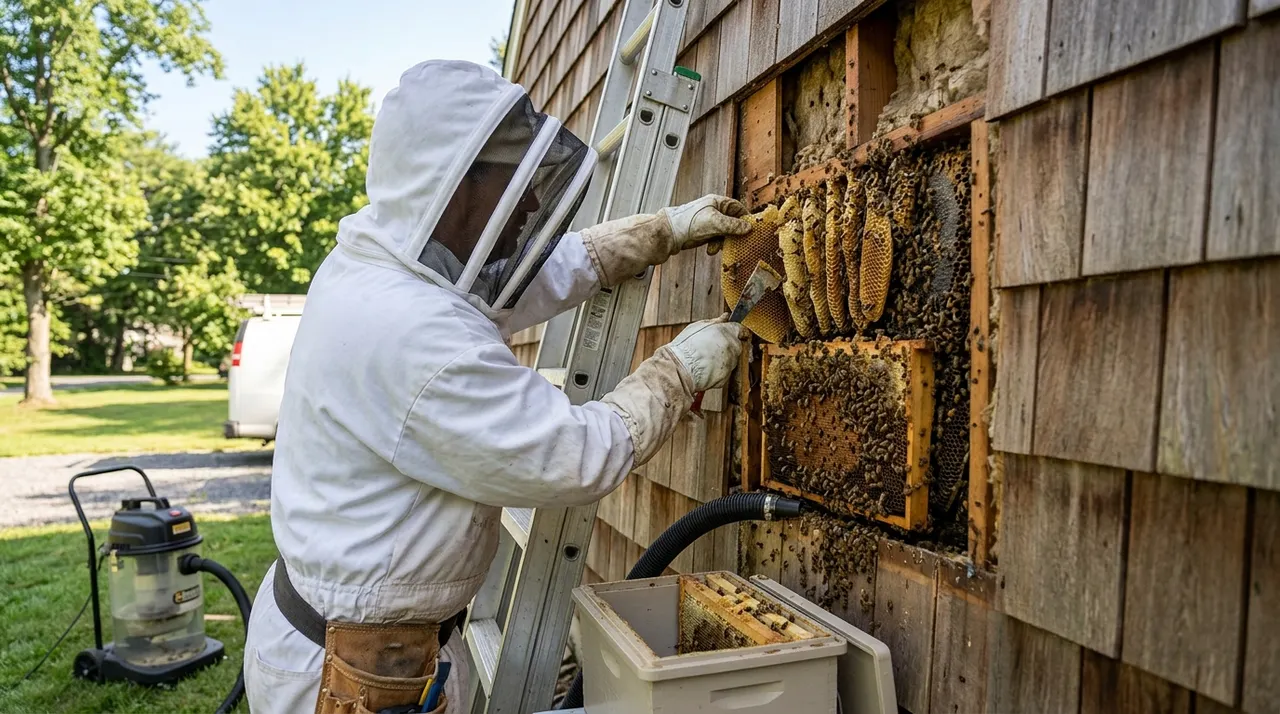
When performing a swarm capture, an experienced beekeeper locates the queen and gently coaxes the cluster into a transport box or ventilated collection unit. Once the queen is secure inside the box, the remaining worker bees follow her natural pheromones and walk inside willingly. For swarms that have already migrated behind siding or soffits, technicians perform careful structural cut-outs, cleanly exposing the colony, vacuuming the bees using regulated low-suction equipment, and cutting out every piece of comb. The entire colony is then relocated to our private apiaries to thrive, produce honey, and pollinate regional crops.
Factors That Influence Removal Scope and Repairs
Homeowners often ask what determines the scope of a bee removal project. Because no two residential structures are identical, several physical variables dictate the necessary approach and labor required:
- Location and Height: A swarm resting on a low porch railing requires straightforward ground equipment. A cluster forty feet up near a roof gable or chimney demands specialized ladders, safety rigging, or lift equipment.
- Cavity Depth and Framing: If bees have entered the building envelope, removal complexity depends on whether they occupy a hollow vinyl soffit, an exterior brick veneer gap, or an interior floor joist cavity.
- Duration of Infestation: A swarm that landed this morning has no comb, meaning it can be collected cleanly from the exterior. A colony that moved in two weeks ago has already built wax combs that require physical extraction and sanitization.
- Restoration Requirements: When siding, fascia, or drywall must be opened to remove comb, structural repair and sealing are required to restore the home's integrity and prevent water intrusion.
Every scenario requires an on-site evaluation to determine the precise entry points, colony boundaries, and restoration steps needed for your specific property.
Preventing Future Swarms on Your Property
After a swarm is safely relocated, taking preventive measures keeps future scouts from inspecting your home. Springtime swarm seasons bring wandering colonies every year across southeastern Pennsylvania.
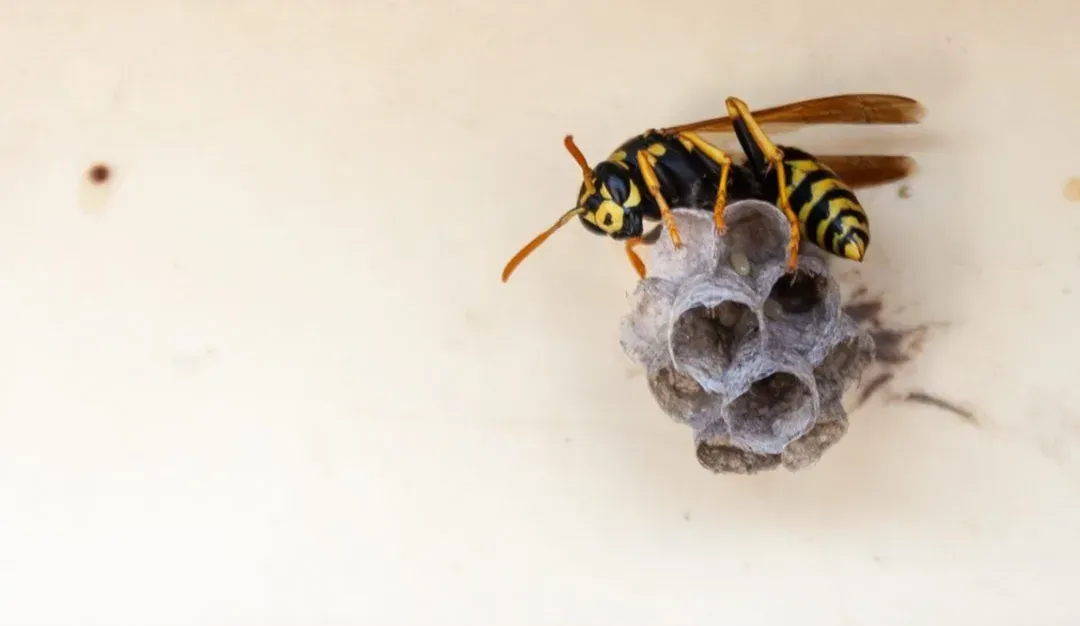
Inspect your home exterior annually for any openings larger than a quarter inch, which is all a honeybee needs to squeeze inside. Check where siding meets the foundation, around plumbing and electrical penetrations, along roof soffits, and around window frames. Seal these gaps using exterior silicone caulk or expanding structural foam. For foundation weep holes and attic gable vents, install fine eighth-inch galvanized wire mesh (hardware cloth). This keeps out honeybees and wasps while preserving vital ventilation.
If you discover an unexpected bee cluster on your exterior wall or suspect bees have entered a wall void, avoid taking unnecessary risks. Rather than attempting dangerous DIY measures, scheduling an experienced bee relocation service in Gilbertsville ensures the colony is safely transported to an apiary without harming your home or the environment.
Protect Your Home and Save the Bees
A honeybee swarm on your house is an urgent situation, but it does not have to result in structural damage or extermination. Prompt action during the first few hours prevents resting bees from establishing permanent comb inside your living space. If you notice a cluster forming on your roofline, chimney, or siding in Gilbertsville, contact Honeybee Rescue Company today. Fill out our online contact form to request an estimate and schedule a prompt on-site assessment for your property.
Common Questions
Frequently Asked Questions
Ready To Start?
Get Your Quote Today
Get a quote from Honeybee Rescue Company — serving Gilbertsville and surrounding areas.