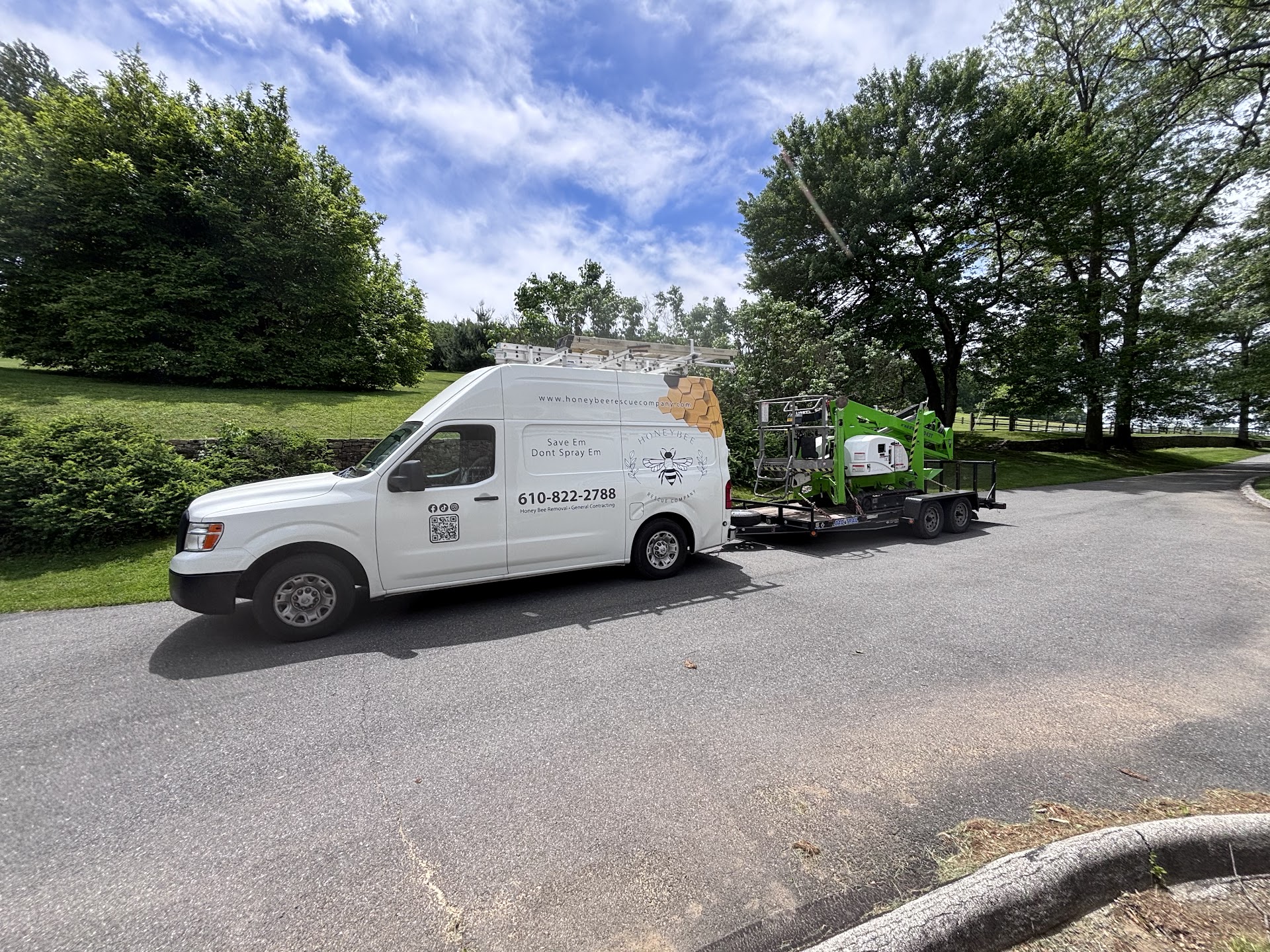
What Happens If Honeycomb Is Left in a Wall in Gilbertsville, PA?
Discover why leaving an abandoned bee hive inside your walls leads to severe property damage and secondary pest infestations.
The Short Answer
Leaving honeycomb inside a wall causes severe property damage and attracts secondary pests. Without the bees to actively cool the hive, summer heat quickly melts the wax. The trapped honey ferments, rots, and seeps through your drywall, creating permanent stains and foul odors. This decaying mass becomes a magnet for rodents, roaches, ants, and wax moths, leading to a much more expensive structural repair.
When a homeowner hears a low, constant buzzing behind their siding, the immediate priority is usually just getting the insects out. Many people assume that once the flying, stinging threat is neutralized, the job is finished. But inside that wall cavity sits a complex, heavy, and highly calibrated biological structure. A mature colony can pack up to 80 pounds of wax, raw nectar, and pollen between your studs. Ignoring that hidden infrastructure creates a domino effect of moisture problems and structural failures that will eventually force you to tear open the wall anyway.
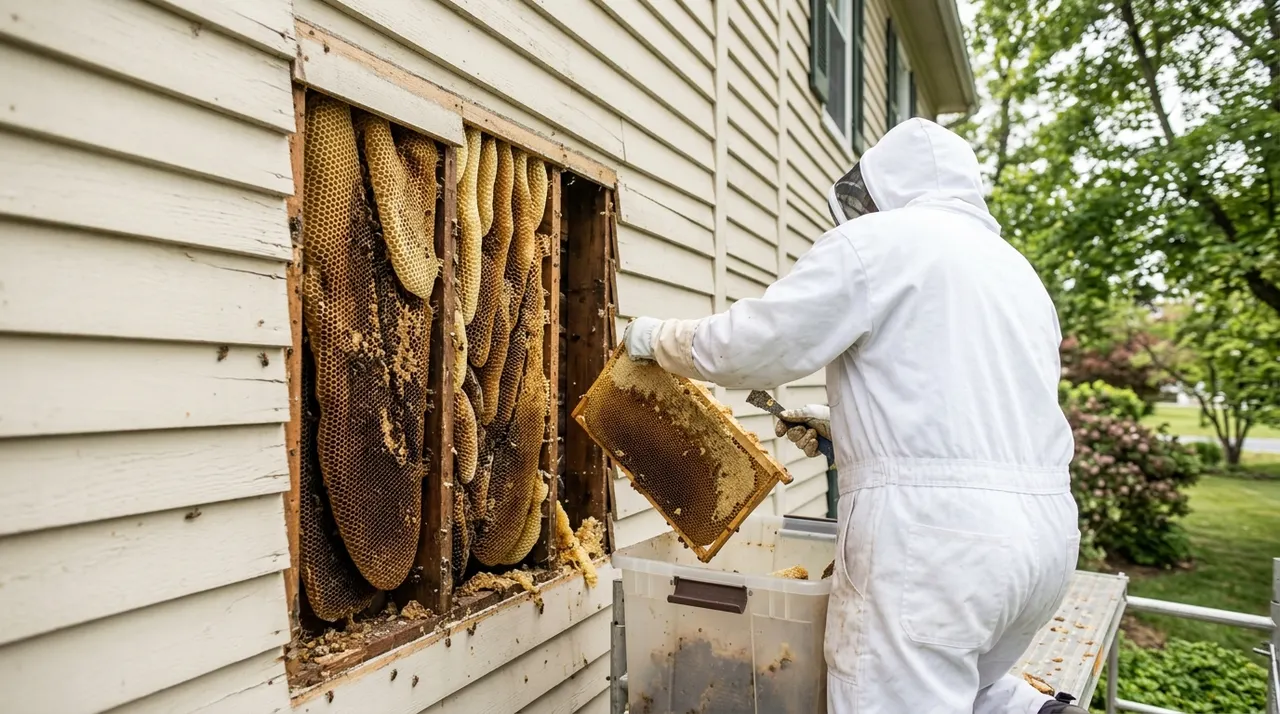
The Hidden Danger Inside Your Wall Voids
When property owners discover a bee colony inside their siding, soffits, or wall voids, the instinct is often to just spray it and seal the hole. It seems like the fastest way to handle the situation. However, killing the colony while leaving the physical infrastructure behind creates a ticking time bomb for your house.
Honeybees are master regulators. During a typical Montgomery County summer, when temperatures climb into the high 80s and humidity peaks, a colony survives by constantly circulating air. Worker bees fan their wings over droplets of water to air-condition the hive, keeping the internal temperature at a stable 93 degrees Fahrenheit. This exact temperature keeps the wax structurally sound and the honey properly cured.
The moment those bees are removed—or worse, exterminated—that temperature control stops. A wall cavity in Gilbertsville baking in the July sun easily exceeds 100 degrees. Without the bees to cool it, the wax foundation softens and collapses. The breakdown is not a slow process; within a matter of days, the structural integrity of the honeycomb fails entirely.
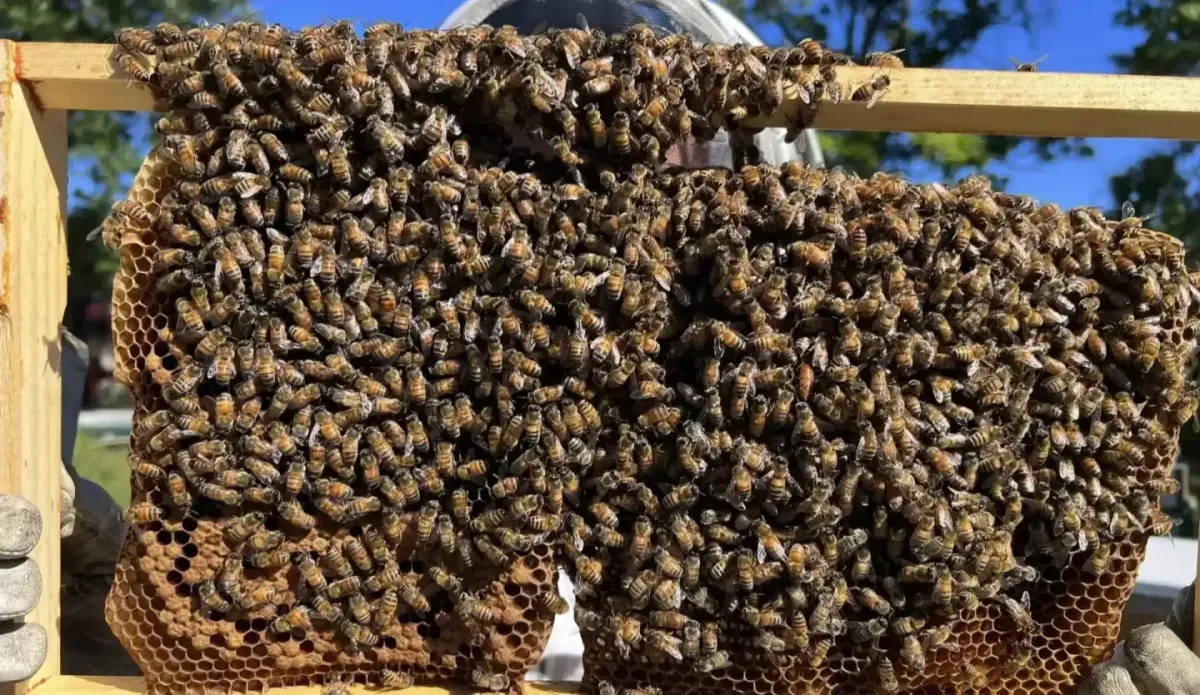
The Three Major Consequences of Abandoned Comb
Once that internal structure fails, the breakdown happens rapidly. When the comb collapses, you are left dealing with a massive mess that affects nearly every system in that section of the house.
1. Structural Damage and Drywall Staining
Honey is incredibly heavy and dense. When the wax melts, all that stored honey has to go somewhere. It follows gravity, running down the wall studs, pooling on the sill plates, and soaking directly into your drywall and insulation.
You will typically start noticing dark, wet, expanding stains on your interior walls or ceilings. Because honey is hygroscopic—meaning it absorbs moisture from the air—it never truly dries out. It remains a sticky, seeping mess that ruins paint, softens drywall, and compromises fiberglass insulation. You cannot simply paint over a honey stain; the sugar will bleed right back through the primer, and the drywall will eventually crumble under the weight and moisture. The only fix is a complete tear-out of the affected materials, which is why a proper honeycomb removal in Gilbertsville is mandatory from the start. Ignoring this step often leads to replacing entire sections of framing if wood rot sets in.
2. Secondary Pest Infestations
If you leave 50 pounds of unguarded sugar and protein inside a wall, nature will find it. A dead hive is an absolute buffet for opportunistic scavengers.
First come the wax moths and small hive beetles. Their larvae tunnel through the abandoned comb, breaking it down into a foul, web-covered sludge. Soon after, the scent of unprotected honey attracts ants, roaches, and wasps. Eventually, rodents catch the scent. Mice and rats will chew through insulation and wood to get to the high-calorie food source, bringing their own nesting habits, chewed wiring hazards, and droppings into your wall voids. According to experts at Penn State Extension, ignoring the physical comb is the leading cause of recurring insect and rodent problems after a bee colony is removed. You essentially trade one flying insect problem for a multi-species infestation that requires ongoing pest control.
3. Fermentation and Mold Growth
Raw honey naturally contains yeast spores. As long as the bees are actively managing the hive, they keep the moisture content of the honey below 18 percent, preventing it from fermenting. Once the bees are gone and the honey absorbs ambient humidity from the Pennsylvania air, the moisture level spikes.
The honey begins to ferment, turning into a bubbling, sour-smelling liquid. This rotting mixture provides the perfect breeding ground for mold and fungi within the dark, unventilated wall cavity. Over time, the entire house can take on a distinct, sour odor that is extremely difficult to eliminate without physically removing the decaying mass. In older homes with poor vapor barriers, this moisture can rapidly accelerate the growth of black mold behind the baseboards.
Why Traditional Extermination Fails
Many standard pest control outfits treat honeybees just like wasps. They show up, dust the entrance with a toxic powder, and leave. While this kills the flying insects, it ignores the core issue entirely.
Poisoning a hive means you now have thousands of dead, decaying bees mixed into the melting wax and fermenting honey. It is a biological mess that smells terrible as it decomposes. Furthermore, if you just seal the entry hole, the residual smell of the comb will simply attract a new swarm of bees next spring. Scout bees can smell an old hive from miles away. They will find a new crack, bypass your sealant, and move right back into the old comb, starting the cycle all over again. Extermination without extraction is just a temporary pause on a permanent problem.
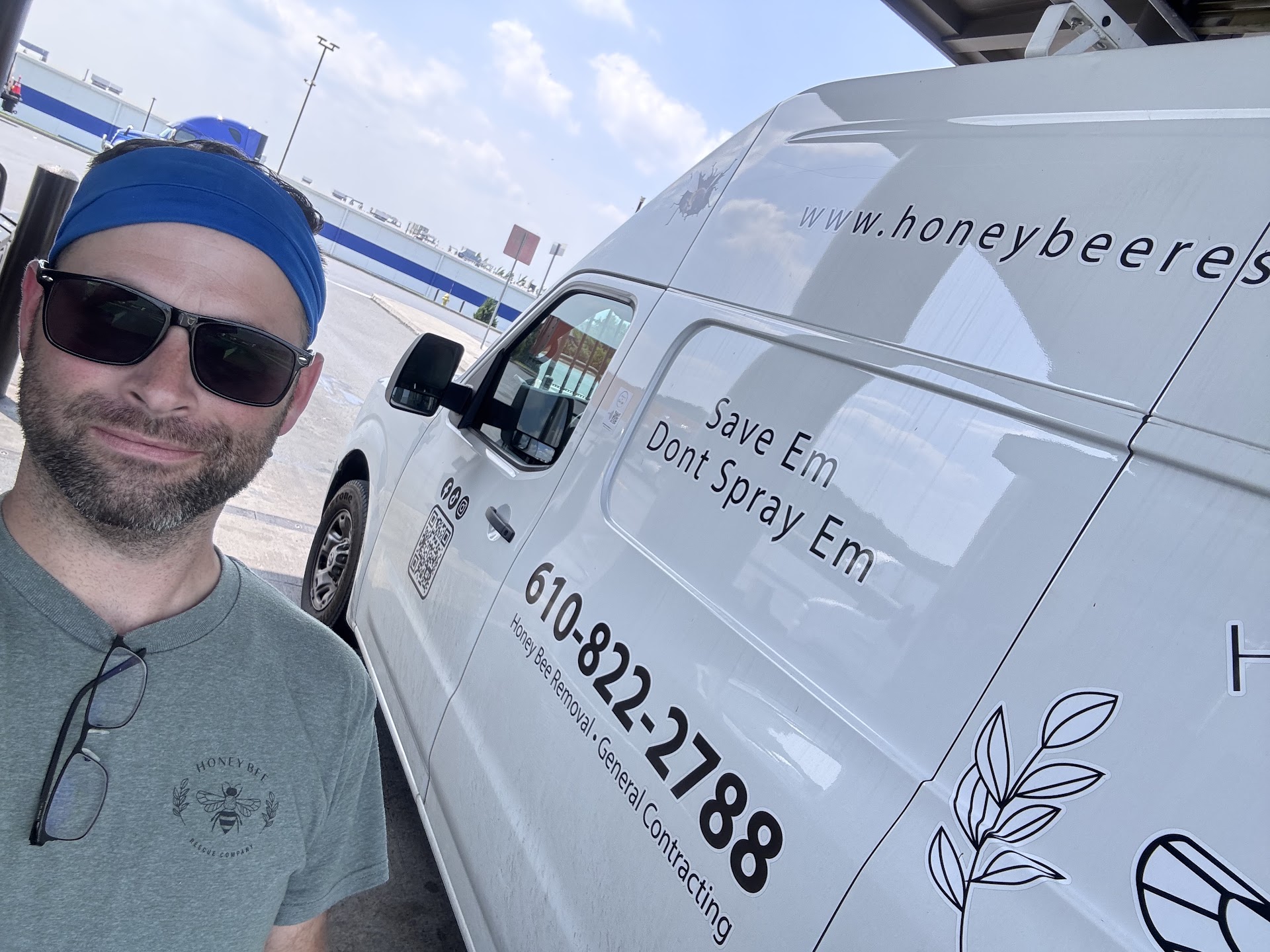
The Cut-Out Process: Doing It Right
At Honeybee Rescue Company, we approach this entirely differently. Ty and Alyssa Kelius built our family business on the principle that the job isn't done until the bees are safe and the home is completely restored.
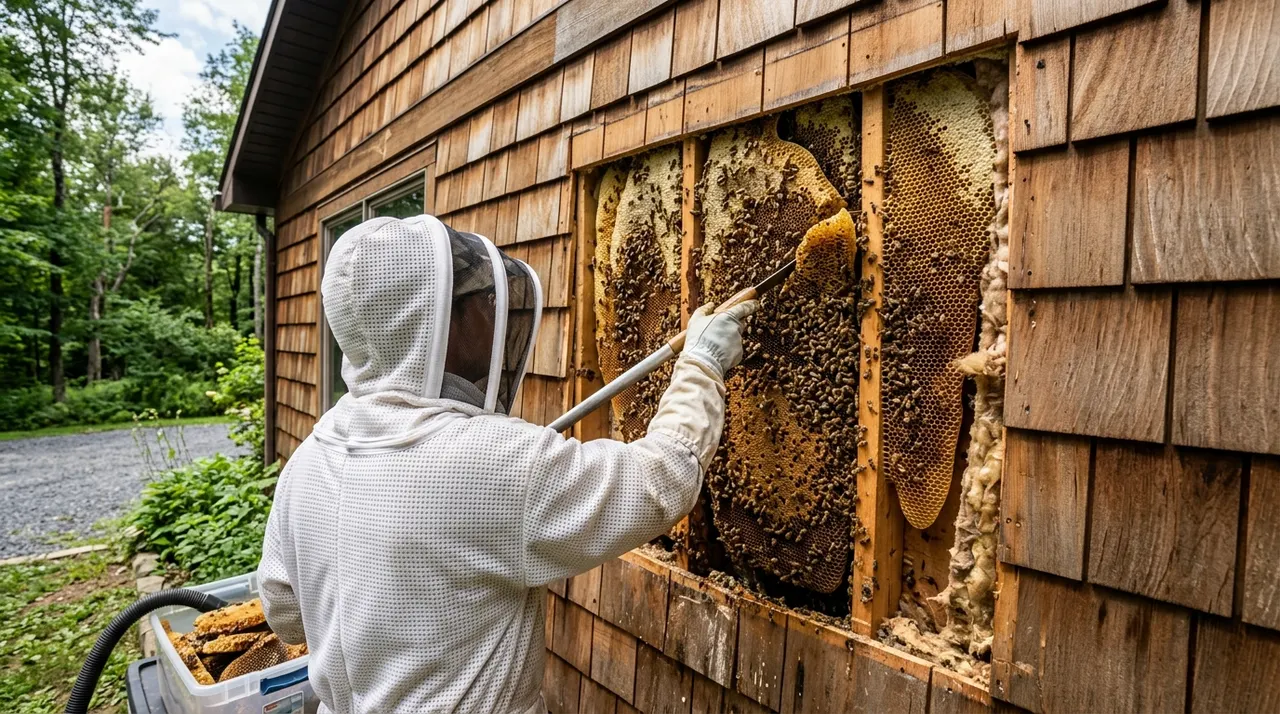
As experienced beekeepers, we do not spray and pray. We perform a live extraction, often called a "cut-out." This means we carefully open up the structure to access the entire colony. We locate the exact extent of the cluster behind your walls so we only cut exactly where necessary. Once exposed, the bees are typically collected using a specialized live-catch bee vacuum so they can be taken to an apiary and rehabilitated.
But just as importantly, we perform a complete physical removal of the comb. The wall cavity is scraped down to the bare wood, removing every trace of wax, honey, and propolis. The area is then cleaned to neutralize residual pheromones so future swarms aren't drawn to the property. Packing the void with insulation eliminates the empty space, making it significantly harder for another colony to move into that exact spot.
Complete Repair and Restoration
Because getting to the hive often requires cutting through drywall, siding, or roof decking, the job inherently leaves a physical hole in your house. Many bee removal services will leave you with an exposed wall and tell you to call a carpenter.
We handle the whole operation from start to finish. Our team includes structural repair as part of our service. Once the void is cleaned and sealed, we rebuild the wall, patch the drywall, and restore the exterior siding. You aren't left managing multiple contractors, dealing with scheduling conflicts, or staring at a tarp on your house for three weeks while you wait for a handyman to show up.
What Factors Influence Your Removal Costs?
Property owners always want to know what this process will run them. Because every house in Montgomery County is built differently, there is no single flat rate.
What you end up paying depends heavily on where the bees decided to build. A hive located behind a first-floor vinyl siding panel is a fairly straightforward job. The materials are easy to remove and replace, and the staging is simple. However, a colony that has spent three years building comb inside a brick chimney, a steep roof return, or a second-story soffit requires scaffolding, specialized masonry work, and significantly more time on site.
The size of the hive also dictates the workload. An established colony can span several stud bays and weigh over a hundred pounds, requiring extensive cutting, structural support, and heavy cleanup. A newer swarm that just moved in a week ago might only have a few small pieces of comb and can be handled quickly. This is why a proper site assessment is the only honest way to determine an accurate price. We have to see what we are dealing with before we can tell you what it will take to fix it.
The Timeline of Comb Degradation
If you are wondering how long you have before the damage starts, the answer depends on the season. If a colony dies or is exterminated in November, the freezing Pennsylvania winter will temporarily solidify the honey and wax. You might not notice a problem for months.
However, as soon as the spring thaw arrives and temperatures rise, that frozen mass will begin to melt and ferment. If the extermination happens in July, the breakdown is almost immediate. Within 48 hours of the colony dying, the lack of ventilation will cause the wax to slump. Within a week, the honey will begin seeping through the drywall. Within two weeks, the smell will become noticeable, and secondary pests will begin to arrive. The clock starts ticking the moment the last bee stops fanning her wings.
Protecting Your Property Long-Term
If you suspect you have a colony living in your walls, do not wait. The longer the bees are allowed to build, the more comb they produce, and the larger the mess becomes.
Remember that dealing with the physical hive is just as important as dealing with the insects. If you just want the bees gone and don't care about the wax, you are setting yourself up for massive drywall repair and secondary pest control down the road. You need an operation that understands both the biology of the hive and the construction of the home. That combination is the only way to ensure the extraction is permanent, safe, and structurally sound.
If you want a team that handles both the extraction and the structural repair without cutting corners, look into a comprehensive bee relocation service in Gilbertsville. Doing it right the first time is always less expensive than paying for an exterminator, a carpenter, and a pest control company separately.
Get an Accurate Quote for Your Specific Project
Don't let a honeybee colony turn your wall voids into a sticky, rotting mess. The longer you wait, the bigger the comb gets, and the more complicated the repair becomes. We can assess your property, locate the exact extent of the hive behind your walls, and walk you through the proper way to extract it and fix the damage. Contact us today to schedule a consultation and get an accurate quote for your specific situation.
Common Questions
Frequently Asked Questions
Ready To Start?
Get Your Quote Today
Get a quote from Honeybee Rescue Company — serving Gilbertsville and surrounding areas.