Is It Illegal to Kill Honeybees in Gilbertsville, PA?
Understand Pennsylvania honeybee laws and why live extraction is the smartest choice for your home.
The Short Answer
No, it is not strictly illegal to kill honeybees in Pennsylvania. While there are no state laws criminalizing their extermination, the Pennsylvania Department of Agriculture strongly encourages live relocation because of their vital role as pollinators. Additionally, federal regulations heavily restrict how pesticides can be applied near active colonies. This makes professional live extraction the safest, most environmentally responsible way to resolve a honeybee infestation in your home.
When property owners in Gilbertsville hear a deep, persistent buzz vibrating through their siding or drywall, panic is usually the first reaction. It's tempting to grab a can of over-the-counter pesticide to solve the problem immediately, but spraying an established hive hidden inside a wall cavity usually creates a much worse, much more expensive disaster. Handling structural colonies in Montgomery County requires understanding both the biology of the hive and the realities of residential construction.
The Legal Landscape for Honeybees in Pennsylvania
A common misconception is that honeybees are federally protected under the Endangered Species Act. They aren't. If you're asking whether the police will show up at your door for spraying a hive, the answer is no. There is no specific state criminal statute that makes exterminating a honeybee colony a jailable offense.
However, that doesn't mean you have free rein to use chemical controls however you see fit. Honeybees are a critical agricultural asset, and their management falls under strict regulatory oversight. According to the Pennsylvania Department of Agriculture's apiary regulations, the state actively works to monitor and protect managed pollinator populations from diseases like American Foulbrood. The state treats honeybees like livestock and actively encourages their preservation. The state apiary inspection program heavily monitors commercial and hobbyist beekeepers alike, issuing quarantines if highly contagious diseases are detected. While a homeowner isn't legally bound by apiary registration rules, the spirit of the law makes it clear: honeybees are a protected agricultural resource, not a nuisance insect.
More importantly, the Environmental Protection Agency (EPA) strictly governs how pesticides are applied. In the pest control industry, the label on a chemical product is considered the law. Many commercial insecticides explicitly prohibit application on or near actively foraging bees. An exterminator caught violating these label restrictions faces steep fines and the potential loss of their applicator license. Because of these stringent rules, most reputable pest control companies outright refuse to spray honeybees, redirecting homeowners to specialized live extraction professionals instead.

The Structural Disaster of a Dead Hive
Even if you successfully navigate the legal restrictions and manage to exterminate the colony, killing the bees is the worst possible outcome for your house.
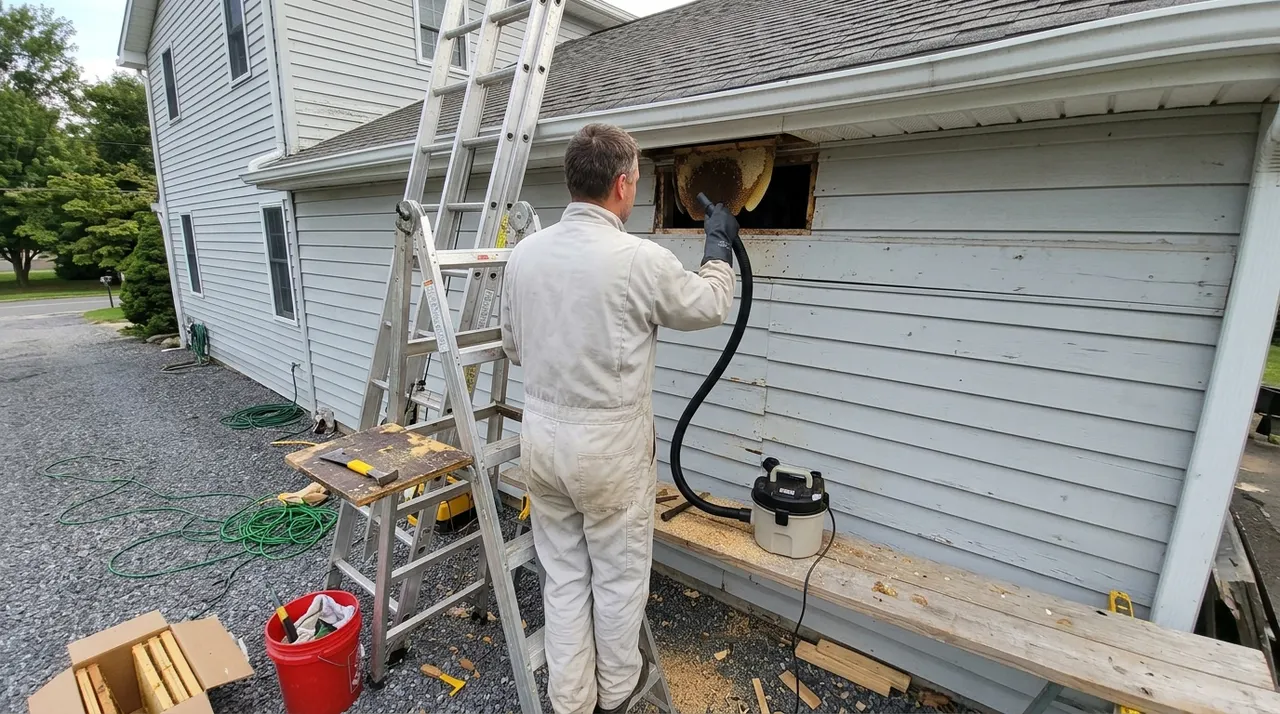
A mature honeybee colony isn't just a handful of insects. It is a highly complex, climate-controlled ecosystem. During the peak summer months in Gilbertsville, a single wall void might hold 50,000 to 60,000 bees along with 40 to 80 pounds of wax, brood, and honey. Worker bees constantly fan their wings to keep the internal temperature of the hive cool enough so the wax structural cells don't collapse.
The moment you kill those bees, the climate control stops. The summer heat quickly raises the temperature inside the stud bay. The wax comb loses its structural integrity and simply melts. Dozens of pounds of raw honey, now mixed with decaying brood and thousands of dead adult bees, will cascade down the interior framing of your house. This rotting, fermenting slurry saturates fiberglass insulation and quickly bleeds through half-inch drywall, leaving massive, foul-smelling brown stains in your living room or bedroom. The sheer weight of the collapsing comb can even warp lightweight framing.
The mess doesn't stop there. The scent of unguarded honey is a massive attractant for secondary pests. Wax moths, small hive beetles, ants, and mice will flood into the wall cavity to scavenge the remains. If cockroaches or rodents discover a fifty-pound food source inside your walls, your pest problem will multiply exponentially. You are trading a live bee problem for a rotting wall, a rodent infestation, and thousands of dollars in structural damage. Ultimately, a carpenter or extraction specialist still has to cut the wall wide open to physically remove the mess. Extermination doesn't save you time or money. It just ensures the cleanup is profoundly more disgusting and significantly more hazardous.
How Honeybees End Up Inside Gilbertsville Homes
Montgomery County features a diverse mix of housing stock, from centuries-old farmhouses with balloon framing to brand-new subdivisions. Honeybees don't discriminate based on architectural style. They are simply looking for a dry, defensible cavity with a volume of about 40 liters—roughly the size of an average stud bay.
In the spring, usually around May or June, healthy colonies reproduce by swarming. The old queen leaves the hive with roughly half the worker population to find a new home. Scout bees scour the surrounding area for suitable real estate. They are incredibly thorough, investigating every tiny gap in a building's exterior. They measure the volume of a cavity by flying cross-patterns inside the dark space.
Common entry points include unsealed weep holes in brick facades, gaps where siding meets the foundation, loose soffit returns, and degraded caulking around chimney flashing. A honeybee only needs a gap of about a quarter of an inch to squeeze through. Once the scouts agree on a location, the entire swarm moves in, often setting up shop between the floor joists or wall studs in a matter of hours. They will immediately begin producing wax, drawing out beautiful, mathematically perfect hexagonal cells to store nectar and raise the next generation of workers.
If you spot a football-sized cluster of bees hanging on a tree branch in your yard, they are in transit. This is a temporary resting spot while the scouts are out hunting for a permanent cavity. This is the ideal time to call for a swarm capture before they move into your siding. Once they enter a wall and begin drawing out wax comb, the situation transitions from a simple capture to a full structural extraction, which is inherently more involved.
Our Approach to Live Extraction and Restoration
At Honeybee Rescue Company, we take a fundamentally different approach to dealing with infestations. Founded by Ty and Alyssa Kelius, our local, family-owned business operates with a strict no-kill policy. We aren't exterminators looking for a quick spray job. We are passionate beekeepers who prioritize humane conservation, ensuring every colony we remove gets a second chance at our own private apiaries.
Because we understand exactly what happens when a hive is handled improperly, we specialize in extracting active colonies from residential walls. The process, commonly known as a "cut-out," is labor-intensive but highly effective.
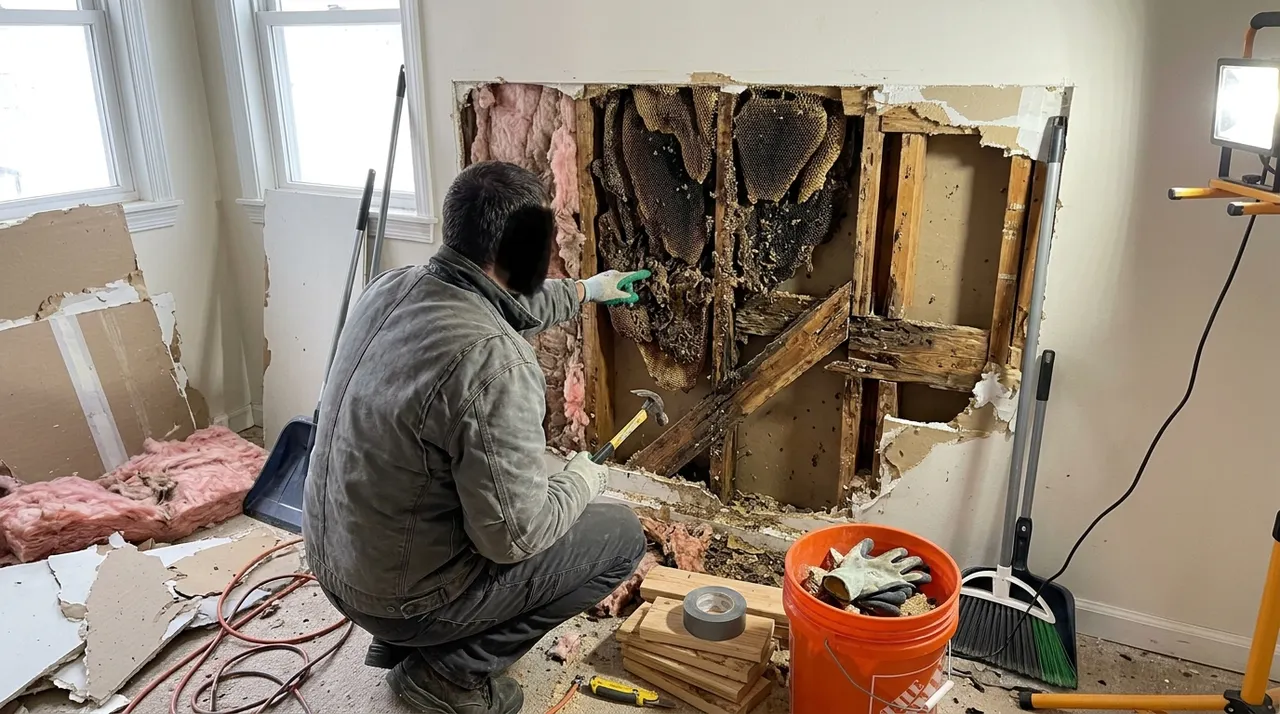
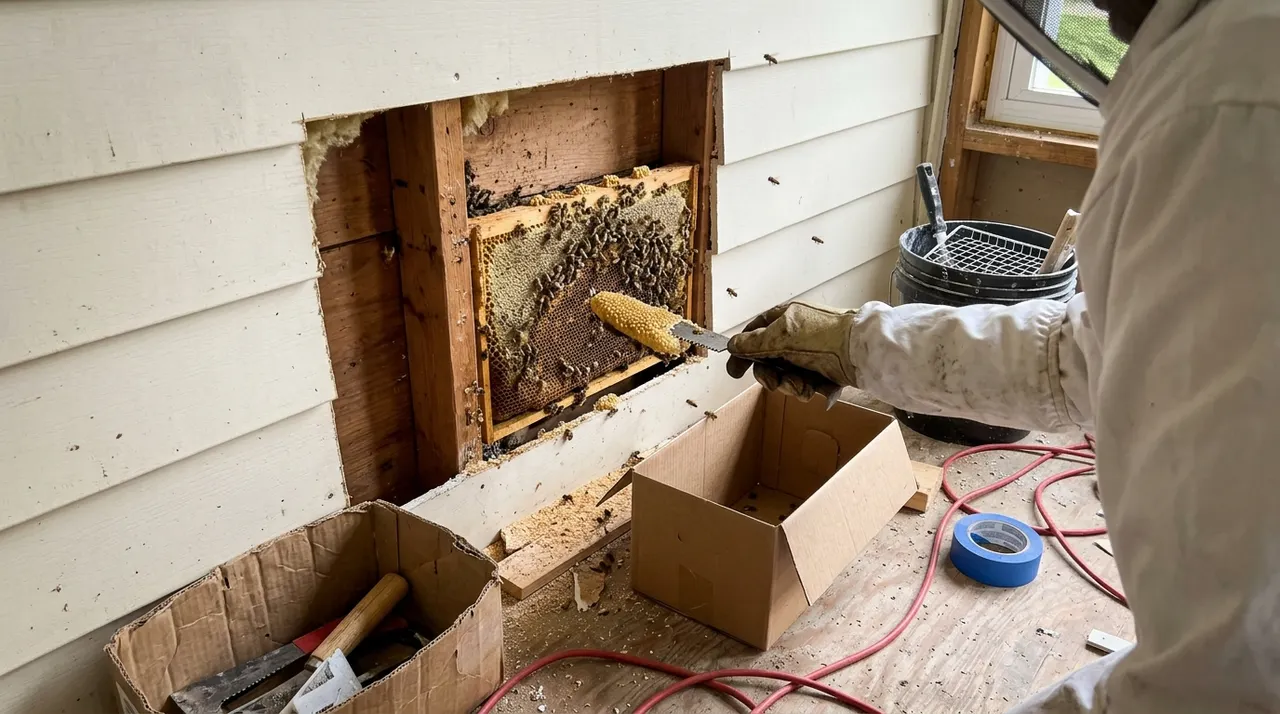
First, the exact perimeter of the hive is typically located using thermal imaging and sound diagnostics. This prevents us from cutting unnecessary holes in your home. Once we know exactly where the colony sits, we carefully open the cavity. We remove the honeycomb frame by frame, taking special care to locate and secure the queen. The remaining worker bees are gently collected using specialized low-suction vacuums designed specifically for delicate insects.
Getting the bees out is only half the job. Unlike a standard pest control outfit that might leave you with a gaping hole in your living room, we handle the entire process from start to finish. Our team cleans the cavity thoroughly, removing all wax and honey residue that could attract future swarms. We then execute a full structural repair. We replace the insulation, patch the drywall or exterior siding, seal the entry points, and restore the property to its original condition. As a fully licensed and insured contractor (PA#105107), we ensure the structural integrity of your home is never compromised.
This comprehensive method is why relocating honeybee hives safely is always the superior choice over chemical extermination. You get a permanent solution, the bees get a safe new home, and your property is completely restored.
What Drives the Cost of a Professional Cut-Out?
A frequent question we hear from homeowners is how much they should budget to get a hive removed. Because every house and every hive is different, throwing out a flat price over the phone is impossible. Professional estimates often involve an on-site fee because an accurate quote requires a thorough physical inspection. Sending a quick photo of a hole in your siding is helpful, but it doesn't tell us what is happening behind the drywall.
Several specific variables dictate the final cost of an extraction:
- Location and Accessibility: A hive located in a first-floor wall void behind vinyl siding is relatively straightforward to access. We can usually set up ladders and handle the job with standard equipment. A colony situated three stories up behind custom masonry, tucked inside an old chimney chase, or deeply embedded in a roof valley requires scaffolding, specialized fall-protection gear, and significantly more time to access safely.
- Size and Age of the Colony: A swarm that moved in three days ago has barely started building wax. That extraction is fast, clean, and requires minimal cleanup. A colony that has been living in a farmhouse ceiling for five years might stretch six feet long, span three different floor joists, and weigh well over a hundred pounds. The larger the comb, the longer the extraction takes. A massive, established hive requires a methodical, careful removal process, and the subsequent structural repair will be much more extensive to ensure the cavity is fully sanitized.
- Building Materials Involved: Cutting through standard drywall is fast and relatively cheap to repair. Disassembling and reassembling historic stone, solid brick, stucco, or complex custom exterior trim work requires specialized carpentry and masonry skills. We factor in the time and materials needed to ensure the repair perfectly matches the rest of your home, so no one can ever tell a hive was there.
- Safety and Environmental Considerations: Steep roof pitches, high voltage lines nearby, or working in confined spaces like a sweltering attic in mid-August all impact the complexity of the job. Safety is always our baseline priority, and challenging environments demand specialized equipment, extra hands, and careful pacing to protect both our crew and your property.
Making the Right Choice for Your Property
Dealing with a buzzing wall is stressful, but acting hastily out of fear usually compounds the problem. Grabbing a can of pesticide might seem like the cheapest option today, but it is a guaranteed recipe for expensive structural repairs tomorrow.
Pennsylvania relies heavily on its pollinators, and professional live removal respects both the environment and your home's integrity. With 10 years of experience in the field, our team understands exactly how to solve complex hive infestations safely and permanently. We have seen firsthand the devastating damage caused by extermination attempts, and we're committed to providing a smarter, cleaner alternative for our community.
If you suspect you have a colony taking up residence in your siding, chimney, or roof, don't wait for the hive to grow larger, and whatever you do, don't attempt to seal the entry hole with expanding foam or caulk. Sealing them in only forces the bees to find another exit, which is usually right into your living room or kitchen. Instead, reach out to schedule an in-depth consultation and estimate so we can assess your specific situation, formulate a safe removal plan, and get those bees safely relocated to our apiary.
Common Questions
Frequently Asked Questions
Ready To Start?
Get Your Quote Today
Get a quote from Honeybee Rescue Company — serving Gilbertsville and surrounding areas.