How Professionals Safely Remove Bald-Faced Hornet Nests in Gilbertsville, PA
A step-by-step guide to how trained technicians locate, neutralize, and extract aggressive hornet colonies in Montgomery County.
The Short Answer
Professionals safely remove a bald-faced hornet nest by performing a low-light assessment, putting on specialized heavy-gauge protective suits, and injecting targeted knockdown treatments directly into the lower entrance hole. Once the hornets are subdued, technicians detach the paper carton, enclose it inside a sealed puncture-resistant container for off-site disposal, and treat the anchor point to stop future queens from rebuilding there.
Discovering a gray, football-shaped paper nest in a backyard maple or tucked under a porch roof in Gilbertsville brings immediate anxiety to any homeowner. Bald-faced hornets defend their territory aggressively, and disturbing an active colony while mowing the lawn or trimming hedges often triggers a swarm of painful stings. Handling a mature nest requires calm, methodical pest management rather than impulsive backyard remedies.
Why Bald-Faced Hornets Are Especially Dangerous in Montgomery County
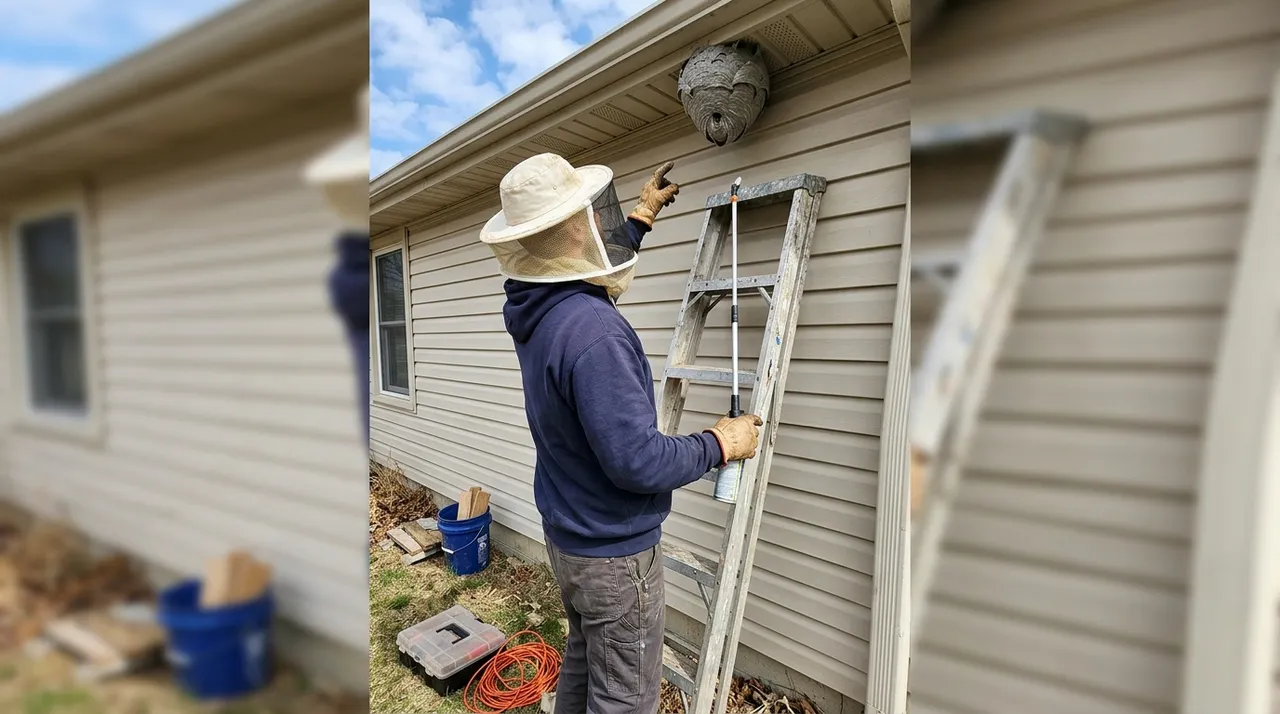
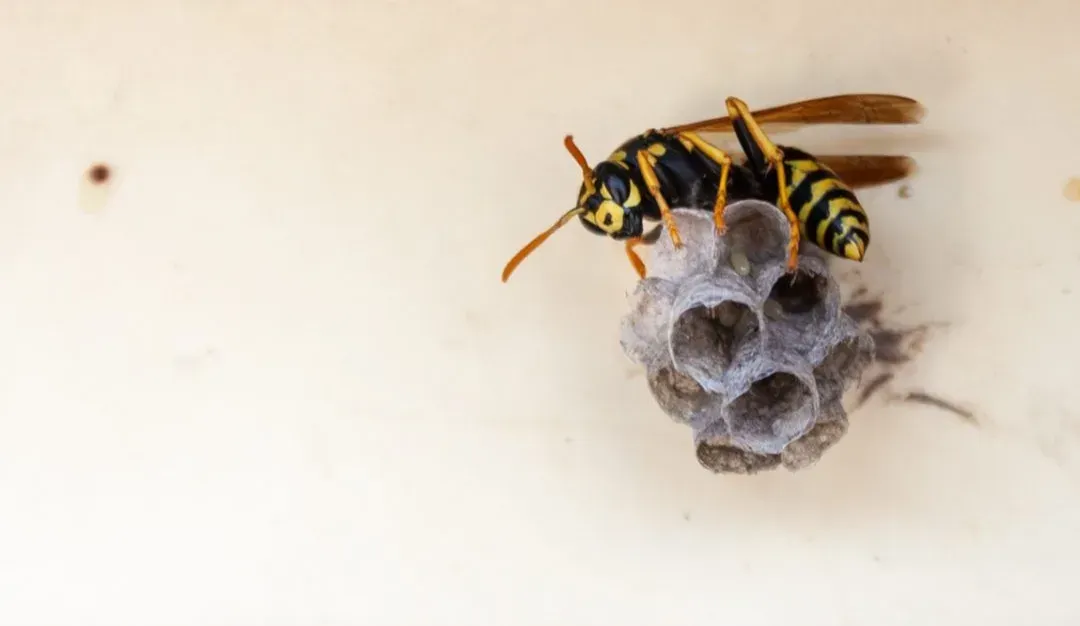
While many stinging insects keep to themselves unless directly stepped on, bald-faced hornets operate with intense territorial aggression. According to Penn State Extension research on bald-faced hornets, these insects are actually a large species of aerial yellowjacket rather than true hornets. In southeastern Pennsylvania, mated queens emerge from overwintering spots in April or May to start building small nests out of chewed wood pulp mixed with starch from their saliva.
Through spring and early summer, colonies remain relatively discreet. Worker hornets hunt flies, caterpillars, and spiders to feed the developing larvae inside horizontal comb layers. By August and September, however, populations swell dramatically. A mature colony in our region often contains between 100 and 400 energetic workers inside an enclosed paper carton that can exceed the size of a basketball.
What makes them particularly dangerous to Gilbertsville residents is their aggressive defense perimeter. They vigorously guard an area extending ten to twenty feet from the nest carton. Unlike honeybees with barbed stingers that pull free after a single sting, bald-faced hornets have smooth stingers. Each worker can sting repeatedly without losing its stinger. They can also spray venom toward the eyes of intruders, causing immediate pain and temporary vision impairment.
The Hidden Risks of DIY Hornet Nest Removal
When property owners spot a hanging nest, their initial reaction is often to grab an aerosol wasp spray from a local hardware store or attempt to blast it down with a pressure washer. In almost every scenario, DIY attempts backfire and put everyone nearby in harm's way.
Retail aerosol sprays advertise twenty-foot spray streams, but wind currents and property angles in open Montgomery County yards disperse the mist before enough active ingredient reaches the opening. More importantly, the nest exterior consists of multiple thick, water-resistant layers of cellulose carton. Spraying the outside simply alerts the colony guard hornets without contacting the hundreds of workers and the queen protected inside the central brood combs.
Ladder work during an insect encounter introduces catastrophic fall risks. If you are standing eight or ten feet up an aluminum ladder when several dozen defensive hornets burst from the entrance hole, safe descent becomes nearly impossible. Emergency rooms treat thousands of fall-related injuries every summer caused by homeowners fleeing stinging insects on ladders.
Standard household clothing provides no meaningful barrier either. Thick denim jeans, hooded sweatshirts, and leather work gloves can easily be penetrated by the long, needle-sharp stingers of mature hornets. Pheromones released during an attack mark the person who disturbed the nest, prompting every hornet in flight to target that exact individual.
Step 1: On-Site Inspection and Threat Assessment
Professional nest removal starts with a quiet, careful visual assessment of the property. When an experienced technician arrives, the first task is locating the nest entrance, checking the flight lines of incoming foragers, and identifying any nearby structural vulnerabilities.
In Gilbertsville, nests frequently appear in dense ornamental trees, under the eaves of two-story homes, along fence lines, or attached to detached sheds and garages. Technicians check whether hornets have exploited small gaps in soffits or siding to expand inside exterior wall cavities. If workers are traveling into a wall void, the removal strategy shifts considerably from handling an exposed aerial branch nest.
Technicians also identify potential hazards in the immediate area. Children's swing sets, patio dining spaces, neighboring fence lines, and air conditioning intake units must be accounted for. Pets and family members are instructed to remain indoors with windows shut during the service. If the nest is located high in a mature hardwood tree, equipment must be planned to reach the site without shaking the branch prematurely.
Step 2: Specialized Protective Gear and Safety Rigging
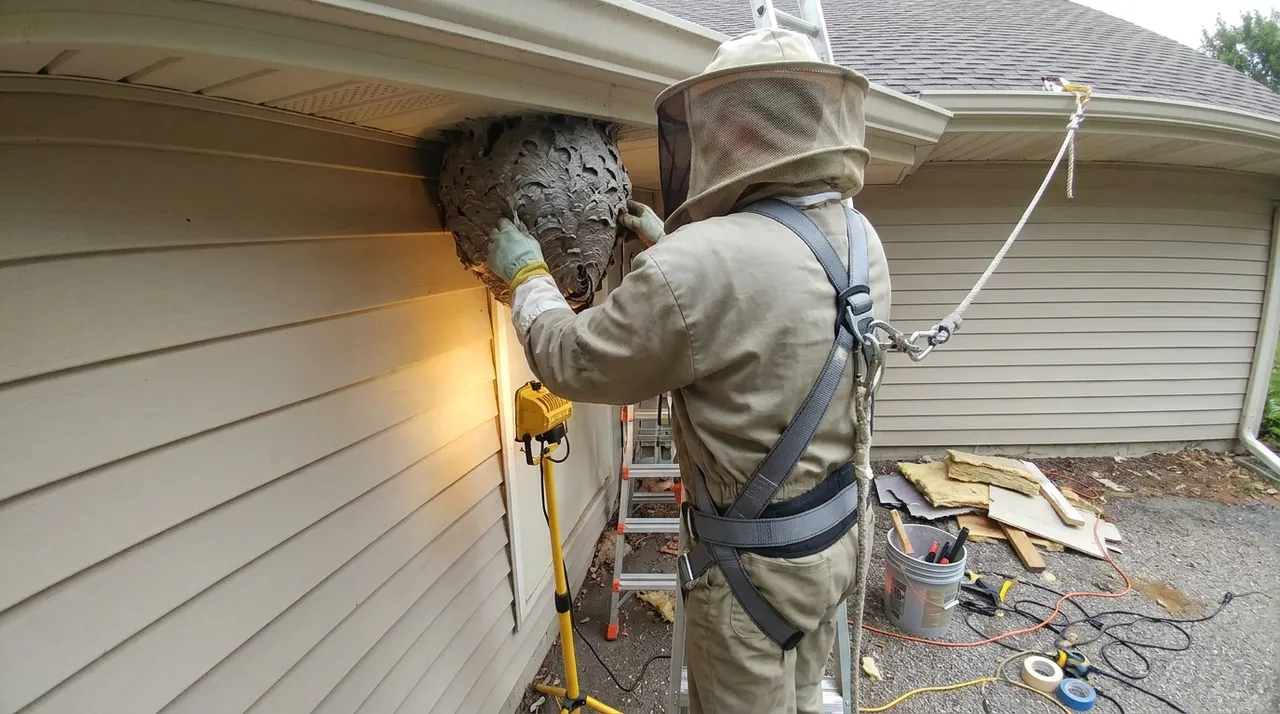
Technicians never approach a bald-faced hornet nest without complete personal protective equipment designed specifically for stinging insect control. Standard bee suits used for honeybee work are often too thin for the forceful sting of bald-faced hornets.
A professional hornet setup uses heavy-gauge, multi-layer canvas or specialized composite fabric that maintains air space between the outer material and the technician's skin. Elasticized seals and heavy-duty zippers at the ankles, wrists, and collar prevent stray hornets from slipping inside. Technicians wear heavy rubberized or double-layered leather gauntlet gloves that extend past the forearm.
Eye protection is equally important. Because this species can squirt defensive venom through fine veil mesh, technicians wear sealed safety glasses or full-face visors beneath their veils. Flashlights with red filters or low-intensity work lights are prepared if the job is performed at dusk or early morning, as insects do not see red light spectrums clearly and remain less agitated.
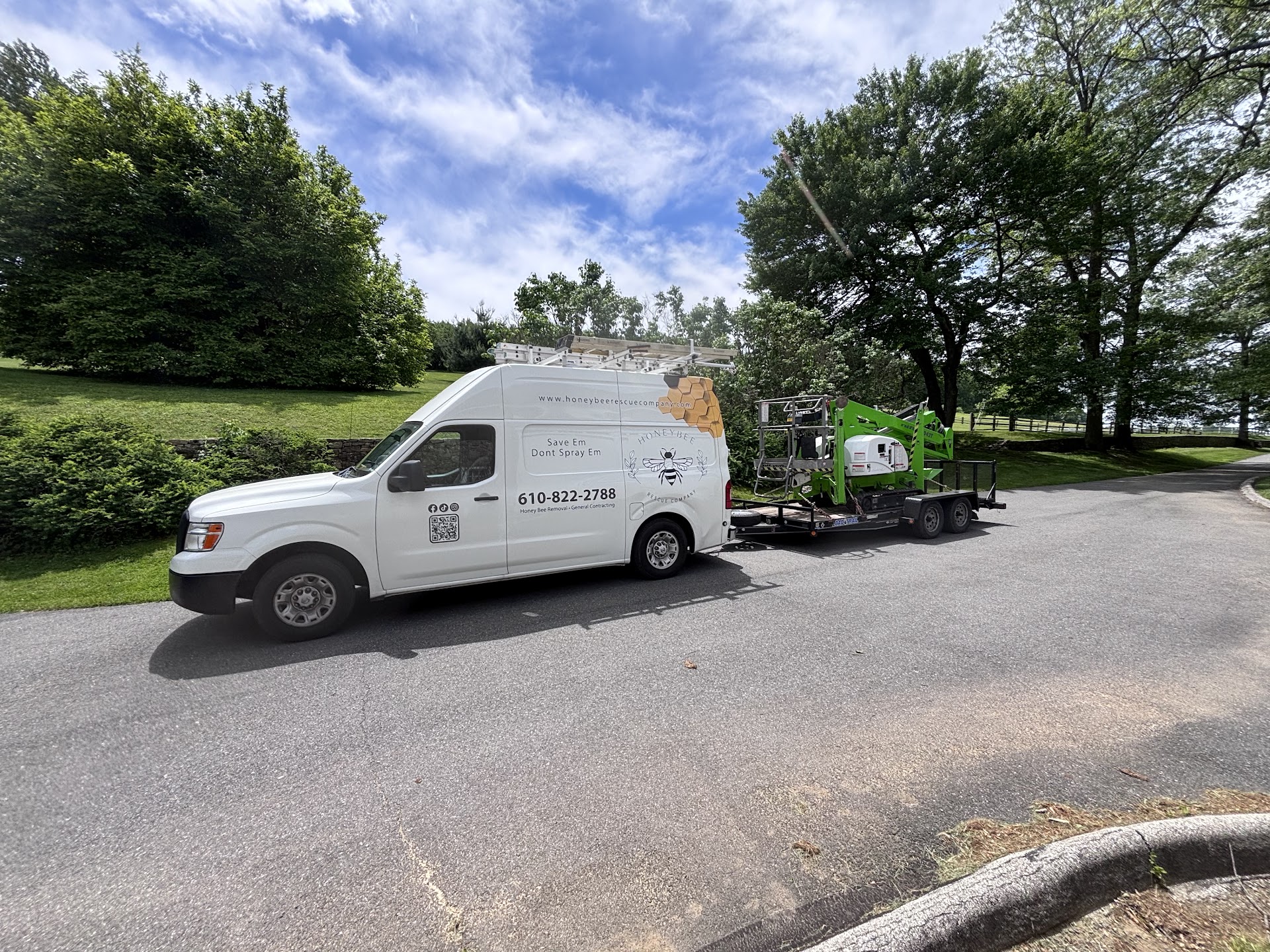
Honeybee Rescue Company maintains rigorous safety standards on every job. Being licensed under PA#105107, our team combines beekeeping expertise with dedicated stinging insect management to protect local homes without unnecessary chemical exposure.

Step 3: Precision Application and Colony Neutralization
Once safety gear is secured, the technician approaches the nest quietly. Bald-faced hornets react strongly to vibrations, so moving tree limbs, tapping siding, or causing sudden ground tremors must be avoided at all costs.
When homeowners seek reliable pest control service in Gilbertsville for aggressive hornets, the primary objective is rapid, targeted knockdown. The technician guides an application wand directly into the single small entrance hole situated near the bottom of the carton. By delivering an approved fast-acting contact formulation straight into the interior chambers, the product coats the internal comb layers instantly.
This internal application neutralizes the guard hornets and the queen before an alarm response can fully mobilize. A professional formulation stays confined inside the carton rather than drifting across your lawn, flowers, or vegetable garden. Technicians monitor the nest for several minutes, watching for returning foragers in the air. As returning workers land at the entrance hole, they encounter the treated paper and are quickly incapacitated.
Step 4: Physical Nest Extraction and Secure Containment
Neutralizing the colony is only part of the job. Leaving a dead paper nest hanging from your roof or tree invites secondary pest problems, including carpet beetles, scavenger wasps, and mice looking for protein sources.
After interior activity has completely stopped, the technician begins physical extraction. For nests hanging in trees, small hand pruners cut the supporting twig cleanly. For nests attached to wood trim, vinyl siding, or aluminum gutters, a wide scraper cuts the fibrous attachment point without scratching or denting the building materials.
The entire paper carton is immediately lowered into a heavy, sealable contractor-grade bag. Once inside, the bag is tightly sealed to trap all comb layers, dead workers, undeveloped larvae, and unhatched eggs. For complete safety and peace of mind, homeowners turn to professional wasp & hornet removal in Gilbertsville so every trace of the nest is securely removed from the property and disposed of properly off-site.
Step 5: Surface Remediation and Re-Nesting Prevention
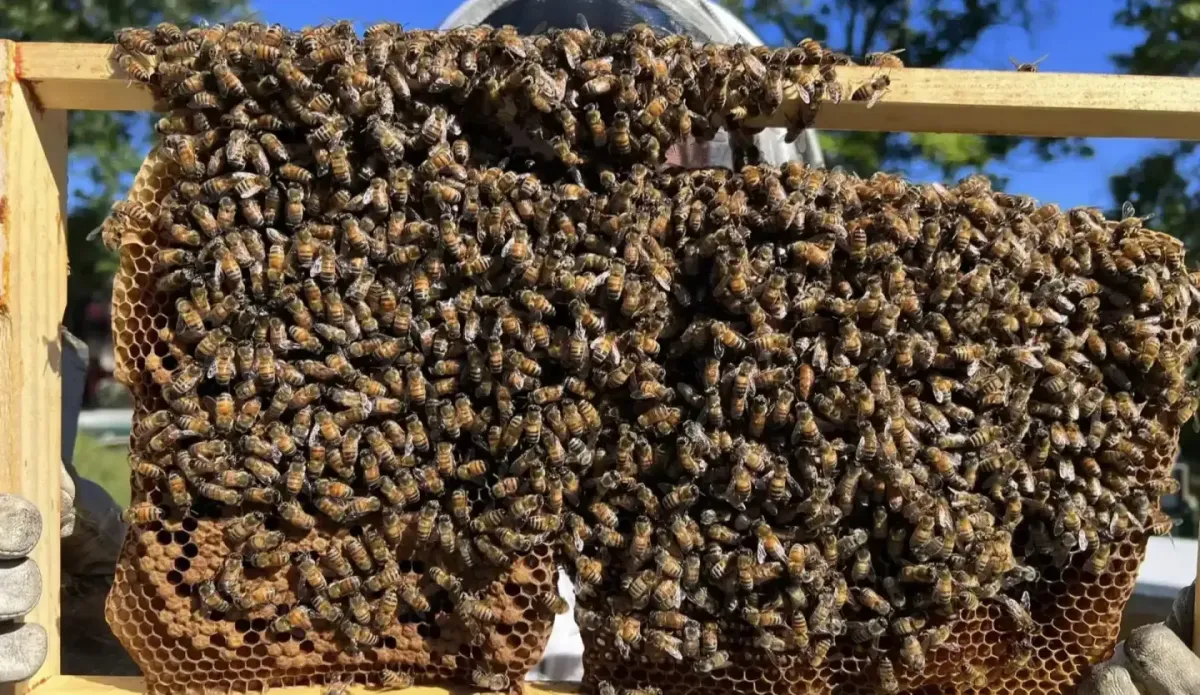
After the nest is bagged, the technician addresses the surface where the nest was attached. Hornet saliva and chewed wood leave a stubborn, dark crust known as the pedicle. This anchor mark contains lingering chemical pheromones that signal an ideal nesting habitat to other queens.
The technician scrapes away remaining cellulose fibers and cleans the surface thoroughly. Applying a localized repellent barrier to the exact attachment zone discourages late-season stragglers and prevents new queens from rebuilding in that exact footprint during subsequent spring seasons.
Technicians also inspect the surrounding eaves, fascia boards, and attic louvers for small entry gaps. At Honeybee Rescue Company, our practical understanding of insect nesting habits helps homeowners identify hidden gaps before opportunistic pests take advantage of them.
What Factors Influence the Cost of Hornet Removal?
Homeowners often wonder why prices vary for stinging insect jobs. Because every property layout presents different challenges, legitimate pest contractors do not quote flat rates over the phone without understanding the physical variables involved.
Several primary factors determine the effort required for safe extraction:
- Nest Elevation: A nest located six feet off the ground in a dogwood shrub requires less equipment than an 18-inch carton thirty feet up an oak tree overhanging a steep driveway.
- Structural Complexity: Free-hanging aerial nests in trees are straightforward to prune, whereas nests built against decorative trim, gutter runs, or second-story dormers require careful mechanical detachment.
- Colony Maturity: An early-season nest in June containing a dozen workers takes less time and material to neutralize than a late-September nest packed with hundreds of defensive hornets.
- Accessibility and Surroundings: Nests situated above glass sunrooms, busy sidewalks, or swimming pools demand strict perimeter controls and specialized containment techniques.
Because these conditions dictate the equipment and time needed, an on-site evaluation is the most reliable way to receive an accurate quote for your specific property.
Schedule Professional Stinging Insect Removal in Gilbertsville
If you have spotted a gray paper nest on your Gilbertsville property, keep your distance and keep pets away from the area. Attempting to manage an aggressive colony without specialized gear puts your household at risk of severe stings.
Let an experienced, licensed and insured team handle the hazard safely and efficiently. Reach out to Honeybee Rescue Company today to schedule your on-site consultation and quote.
Common Questions
Frequently Asked Questions
Ready To Start?
Get Your Quote Today
Get a quote from Honeybee Rescue Company — serving Gilbertsville and surrounding areas.