How Professionals Locate Hidden Honeycomb in Gilbertsville, PA
Expert methods for finding and removing hidden honeybee colonies safely.
The Short Answer
Professionals locate hidden honeycomb inside walls by observing flight patterns at the exterior entry point and using specialized equipment like thermal imaging cameras to detect the heat generated by the colony. Technicians may also use borescopes or acoustic stethoscopes to pinpoint the exact stud cavity, minimizing unnecessary drywall damage before the extraction begins.
A honeybee colony inside your home is a major structural liability. When thousands of bees move into a wall void, they bring pounds of wax, raw nectar, and honey that can quickly melt into your drywall, insulation, and framing. In Gilbertsville and the surrounding Montgomery County area, the first step to solving the problem is never swinging a sledgehammer. Opening a wall blindly usually results in massive, unnecessary property damage, and if you cut into the honey stores rather than the empty framing below it, you can flood your own living room with sticky nectar. Finding the exact footprint of the hive takes a specific process.
Before any drywall is cut or siding is removed, the colony's exact location, size, and orientation must be mapped out. To do this, the trade relies on a combination of insect biology, architectural knowledge, and modern imaging equipment. Here is exactly how that hidden comb is tracked down, mapped out, and prepared for extraction.
Reading the Exterior Flight Paths
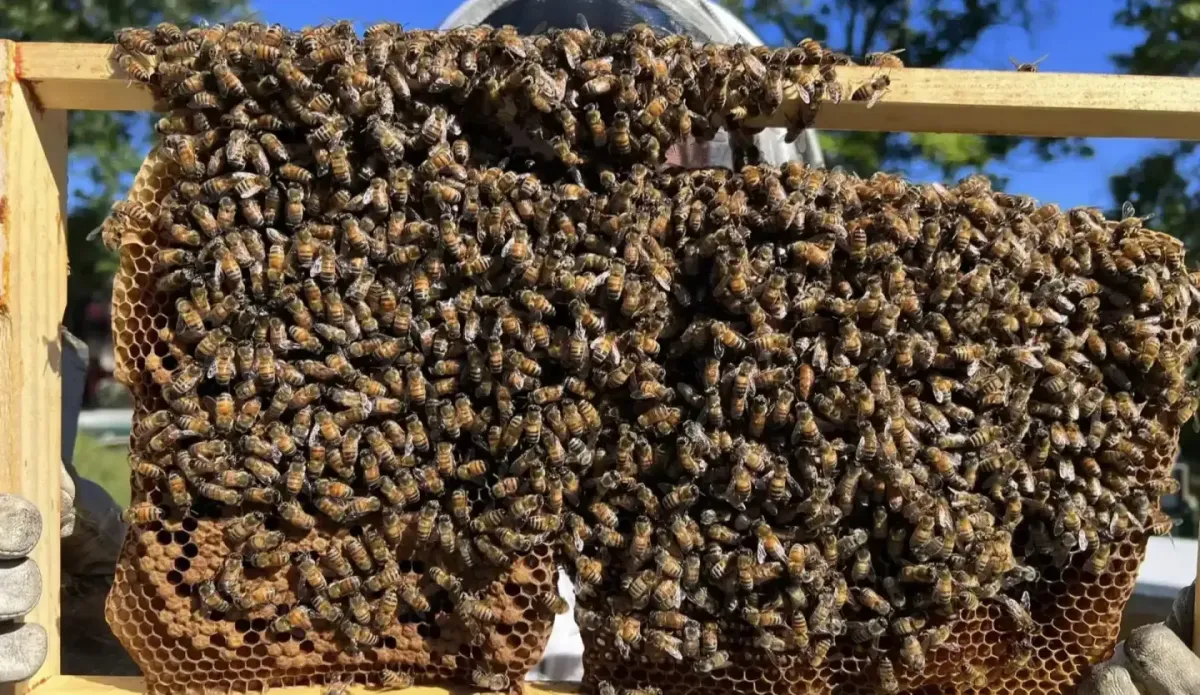
The investigation always begins outside the house. A trained eye doesn't just look for where the bees are entering; they look at exactly how the bees are entering and exiting. Honeybees do not fly aimlessly. Foragers leave the hive in a direct line toward nectar sources, and returning bees heavily laden with pollen will often drop slightly as they approach the entrance.
By observing the main entry point, whether that is a gap in the vinyl siding J-channel, a missing brick mortar joint, or a cracked soffit vent, a specialist can determine the colony's maturity and traffic volume. However, the entry point on the outside of the house rarely lines up perfectly with the actual honeycomb on the inside. Bees will often enter a gap in the exterior cladding and then crawl several feet along a joist or through a wall cavity before reaching the actual brood nest. Assuming the hive sits immediately behind the exterior entrance is the most common mistake inexperienced operators make.
Mapping the Stud Cavity with Thermal Imaging
The most effective tool for finding hidden honeycomb is a thermal imaging camera. Honeybees are incredibly efficient regulators of temperature. To keep their developing brood alive, worker bees must maintain a constant nest temperature of roughly 93 to 95 degrees Fahrenheit, regardless of the weather outside. During the cooler spring and autumn months in Pennsylvania, or in a heavily air-conditioned home in the summer, this creates a stark temperature contrast.
Professionals typically scan the interior walls with a FLIR (Forward Looking Infrared) camera. When looking through the lens, the standard framing and insulation show up as cool colors. But right where the brood nest sits, a massive, glowing heat signature appears on the screen. The thermal camera allows the operator to see exactly which stud bay the bees are occupying, how far up the wall the comb extends, and where the cluster ends. This removes the guesswork, so when the wall is finally opened, the cuts land right at the borders of the colony.
Acoustic Verification and Borescopes
Thermal imaging is highly effective, but it has limitations. If a home is poorly insulated and the afternoon sun is baking an exterior brick wall, the ambient heat can wash out the bees' thermal signature. In these situations, the standard approach involves acoustic and visual confirmation.
A simple mechanic's stethoscope is often pressed against the drywall to listen to the activity inside. A mature colony generates a distinct, low-frequency hum. You can often hear the crackling sound of bees chewing on the paper backing of the fiberglass insulation or moving across the wood lath. By moving the stethoscope across the wall, a specialist can track where the humming stops, marking the physical boundaries of the comb.
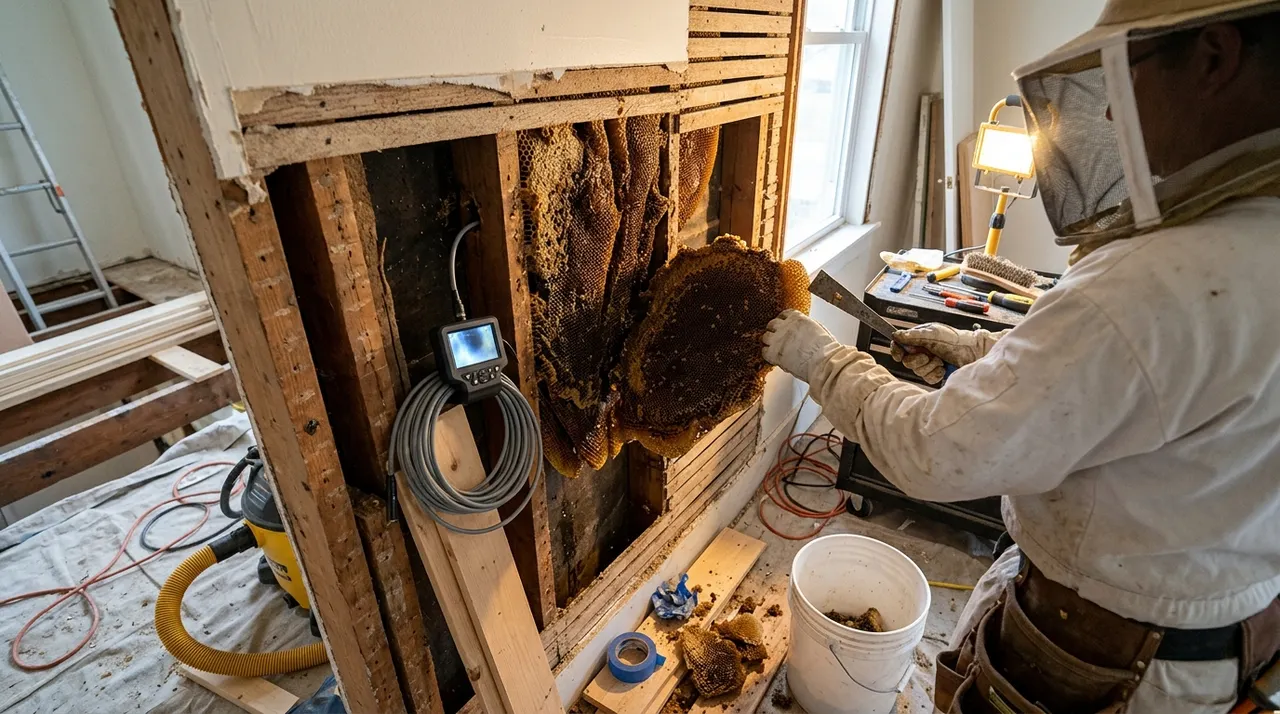
When absolute certainty is required before making a major cut, professionals may drill a tiny, quarter-inch hole between the studs and insert a flexible fiber-optic borescope. This tiny camera snakes into the wall void, providing a direct visual of the honeycomb, the orientation of the wax sheets, and the presence of any plumbing or electrical wires that might complicate the extraction.
How Local Architecture Affects the Search
The housing stock in Montgomery County dictates how a bee colony spreads once it gets inside. In modern subdivision homes, builders use platform framing. This means there are horizontal top and bottom plates on every floor, effectively capping the wall void at about eight feet. A bee colony in a modern home is usually confined to a single stud bay on a single floor.
However, older farmhouses and historic properties around Gilbertsville often feature balloon framing. In these structures, the wall studs run continuously from the foundation sill all the way to the roofline without horizontal fire blocks. If a honeybee swarm moves into a balloon-framed house, the comb can easily span two stories, creating a massive column of wax and honey that requires extensive tracking to fully uncover.
The Honeybee Rescue Company Extraction Process
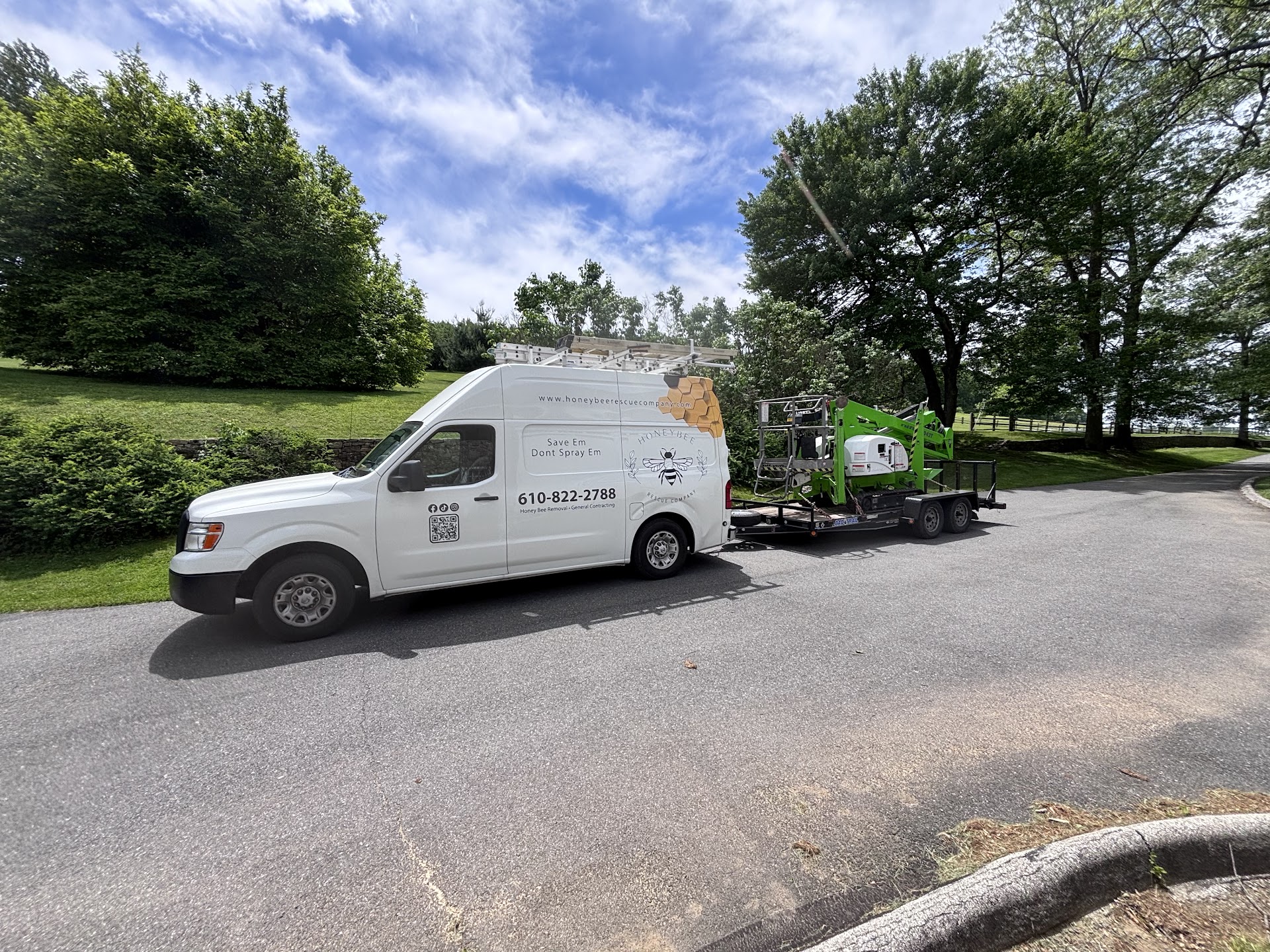
Once the honeycomb is mapped, the real work begins. At Honeybee Rescue Company, we operate with a strict no-kill policy. Led by Ty and Alyssa Kelius, our family-owned business handles the process differently than a standard exterminator. We are experienced beekeepers who prioritize humane conservation, and we handle this work ourselves.
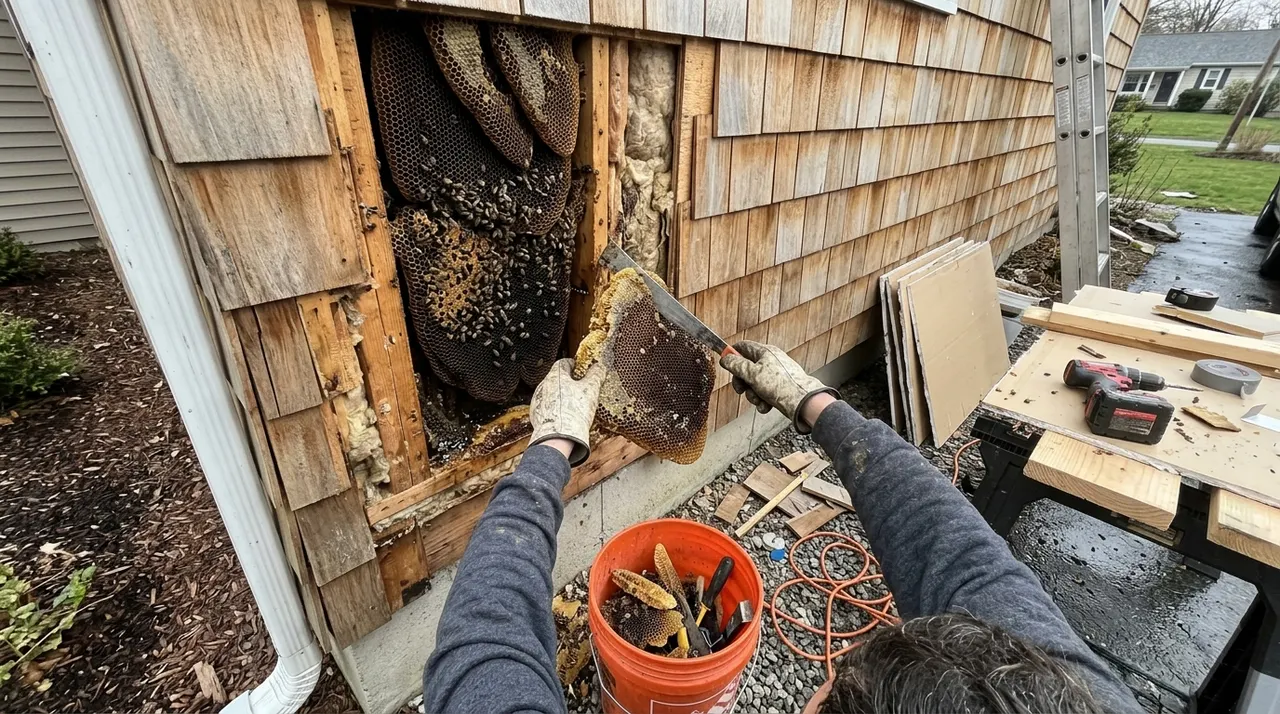
Instead of spraying pesticides into the wall—which leaves behind rotting brood, melting wax, and fermenting honey that will ruin your home—we perform a live structural cut-out. We carefully open the interior drywall or exterior siding based on our mapped boundaries. Specialized low-suction vacuums designed specifically for honeybees are typically used to capture the live insects safely. Every piece of wax, honey, and brood comb is then cut out by hand.
Removing the comb is just as important as removing the bees. If left behind, the unprotected honey will attract wax moths, hive beetles, rodents, and other colonies of bees. To ensure the colony doesn't return, a professional honeycomb removal in Gilbertsville is required. The cavity is typically cleaned down to the bare wood, removing the pheromones that signal to future swarms that your wall is a good place to live.
Because our focus is on conservation, the bees aren't just removed; they are rehabilitated. We transport the extracted colonies back to our own private apiaries. There, we re-queen them if necessary and give them a second chance to thrive and produce local honey, which is why we emphasize humane live bee relocation in Montgomery County over extermination. For more information on the agricultural importance of these pollinators, you can review the guidance on Pennsylvania honey bees from Penn State Extension.
Handling the Structural Repairs
Cutting into a home to remove a colony is construction work, and you need a contractor who can put the house back together. The team at Honeybee Rescue Company doesn't leave you with a gaping hole in your living room or missing siding on your exterior. We handle the structural damage repair, fixing the cut-outs made during the extraction process so your property is fully restored.
It is worth noting the local regulatory environment for major wall repairs. Because Gilbertsville is a community rather than its own incorporated municipality, building permits for substantial structural repairs are usually handled by Douglass Township or New Hanover Township, depending on where your property line falls—though requirements vary by municipality, so always confirm with your local building department before relying on this. In most standard drywall cut-outs, the repair is straightforward patching and finishing, but larger structural replacements must be handled properly.
What Drives the Cost of a Wall Cut-Out?
Homeowners often want to know what to expect when hiring a professional to open a wall and remove a colony. Pricing varies widely, so contact us for pricing on your specific job.
However, your actual cost depends entirely on your specific situation. A colony that moved in two weeks ago and built three small pieces of comb between ground-level studs is a completely different project than a mature, three-year-old hive spanning a second-story chimney chase. Access requirements, the height of the entry point, the materials covering the wall (plaster, brick, or drywall), and the amount of structural repair needed all dictate the final number.
The only way to know the true scope of your project is through a professional assessment. If you hear buzzing behind your walls or see bees entering your siding, do not plug the hole and do not spray insecticide into the gap. You will only trap the bees inside to die, rotting the wall out from the inside. Instead, contact Honeybee Rescue Company. Fill out our form to schedule a consultation and get an estimate for safely removing the honeycomb, saving the bees, and restoring your Gilbertsville home.
Common Questions
Frequently Asked Questions
Ready To Start?
Get Your Quote Today
Get a quote from Honeybee Rescue Company — serving Gilbertsville and surrounding areas.