How Live Honeybee Removal Works in Gilbertsville, PA
A complete step-by-step walkthrough of humane honeybee extraction, colony relocation, and structural repair for southeastern Pennsylvania properties.
The Short Answer
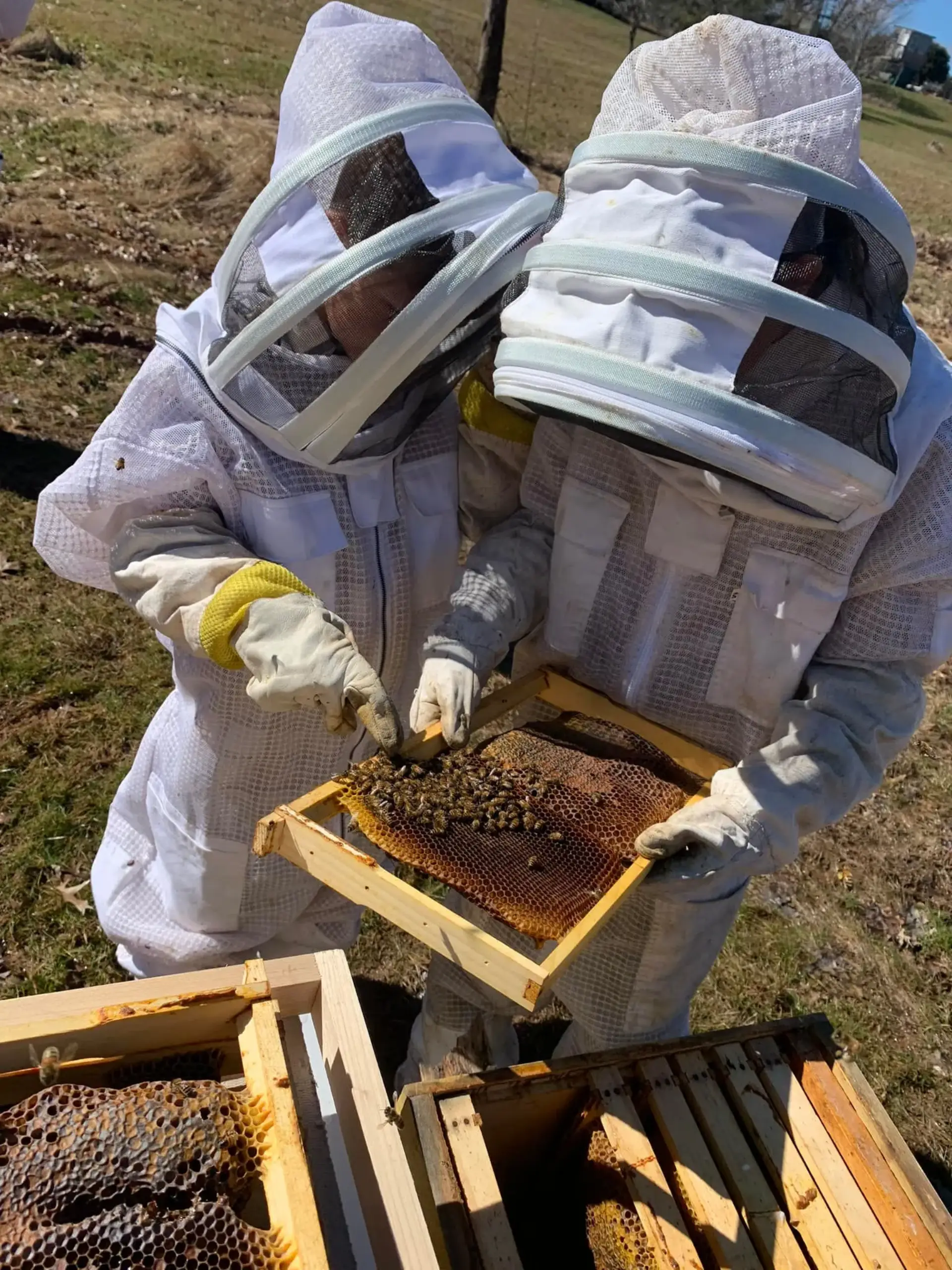
Professional beekeepers remove honeybees alive through structural cut-outs or swarm traps rather than chemical sprays. Specialists locate the hive inside the structure, open the cavity carefully, and transfer the active comb and queen into transport boxes using gentle, low-pressure bee vacuums. The entire colony is then relocated to a managed apiary, and the structure is cleaned and sealed against future infestations.
A steady hum vibrating behind an upstairs bedroom wall or a dark cloud of insects buzzing near your roofline can rattle any property owner in Gilbertsville. In early spring across Montgomery County, scout bees search for dry, protected cavities to house an expanding colony, and the spaces between exterior siding and interior drywall look like prime real estate. When homeowners notice thousands of bees entering through an unsealed weep hole or soffit gap, their initial impulse is often to reach for an over-the-counter insecticide or call an exterminator to spray the opening. Doing that creates an immediate disaster. Choosing live honeybee removal instead protects your home, whereas killing a colony inside a wall leaves behind tens of thousands of dying insects and pounds of unprotected honey that will rot, spoil, and slowly destroy your structure.
Why Extermination Creates Costly Structural Damage
Understanding the biological reality of a hive explains why chemical extermination backfires so badly. Honeybees are social insects that actively regulate the temperature of their nest. During hot Pennsylvania summers, worker bees fan their wings over the comb to keep the wax below its melting point of about 145 degrees Fahrenheit. When an exterminator sprays poison into the entrance, the bees die rapidly, but the combs remain. Without living bees to fan the hive, heat builds up inside the unventilated wall void. The wax breaks down, causing gallons of honey to leak into wall cavities, pool on header beams, soak into drywall, and drip through ceiling plaster.
According to Penn State Extension research on honey bees, healthy colonies can expand rapidly throughout the summer nectar flow, producing dozens of pounds of surplus honey and brood comb in a matter of weeks. When that volume of honey sits abandoned inside a building, wild yeasts ferment the sugar, producing an acidic, sour liquid that stains paint and eats through building materials. The rotting brood creates a foul stench that lingers for months. Worse yet, the scent of unprotected honey attracts wax moths, carpet beetles, ants, and mice. Homeowners who try to spray often end up spending significant amounts tearing out rotted studs and ruined ceilings to clear away the mess.
Step 1: Locating the Colony Without Blind Demolition
A successful live extraction starts with accurate detection. Honeybees rarely build their comb right at the exterior hole where you see them flying in and out. They often enter through a small gap in the siding or mortar, crawl several feet along an internal framing bay, and establish their brood nest deep inside a joist cavity or behind a knee wall.
Professional removal specialists do not guess or start smashing holes in random pieces of drywall. Instead, technicians use diagnostic tools such as forward-looking infrared thermal cameras and acoustic listening devices. Because the brood nest maintains a constant temperature of roughly 95 degrees Fahrenheit, a thermal imaging camera detects the heat signature of the cluster through plaster, wood siding, or drywall. By mapping this thermal footprint against the home's framing, the technician pinpoints the exact boundary of the nest. Knowing precisely where the comb begins and ends keeps structural openings small and prevents messy surprises.

Step 2: Performing a Controlled Structural Cut-Out
Once the location is mapped, the technician determines whether to access the hive from the inside or the outside of the home. This decision depends on the construction style, the height of the entrance, and the type of siding. In Gilbertsville, where homes range from historic stone and wood structures to modern subdivisions with vinyl siding, exterior access is often preferred to keep dust, bees, and debris out of your living space. However, if the hive sits behind brick veneer, accessing it from interior drywall is usually far cleaner and much less disruptive to repair.
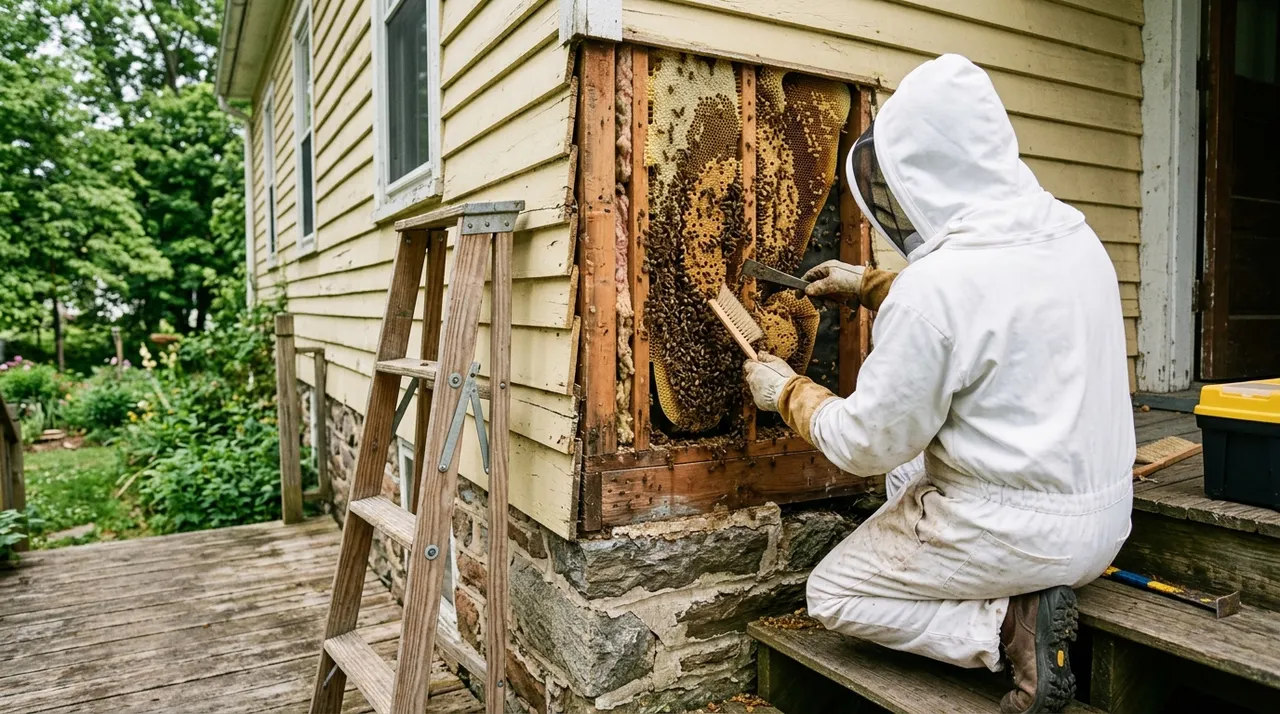
The technician carefully removes the siding panels, cuts back the exterior sheathing, or cuts a clean rectangular opening in the interior drywall along the wall studs. This controlled structural access is the foundation of professional live bee removal in Gilbertsville, allowing specialists to reach the brood nest without causing unnecessary damage to surrounding building materials. Opening the cavity exposes the sheets of wax comb hanging between the wall studs, covered with tens of thousands of active bees.
Step 3: Collecting Worker Bees with Specialized Equipment
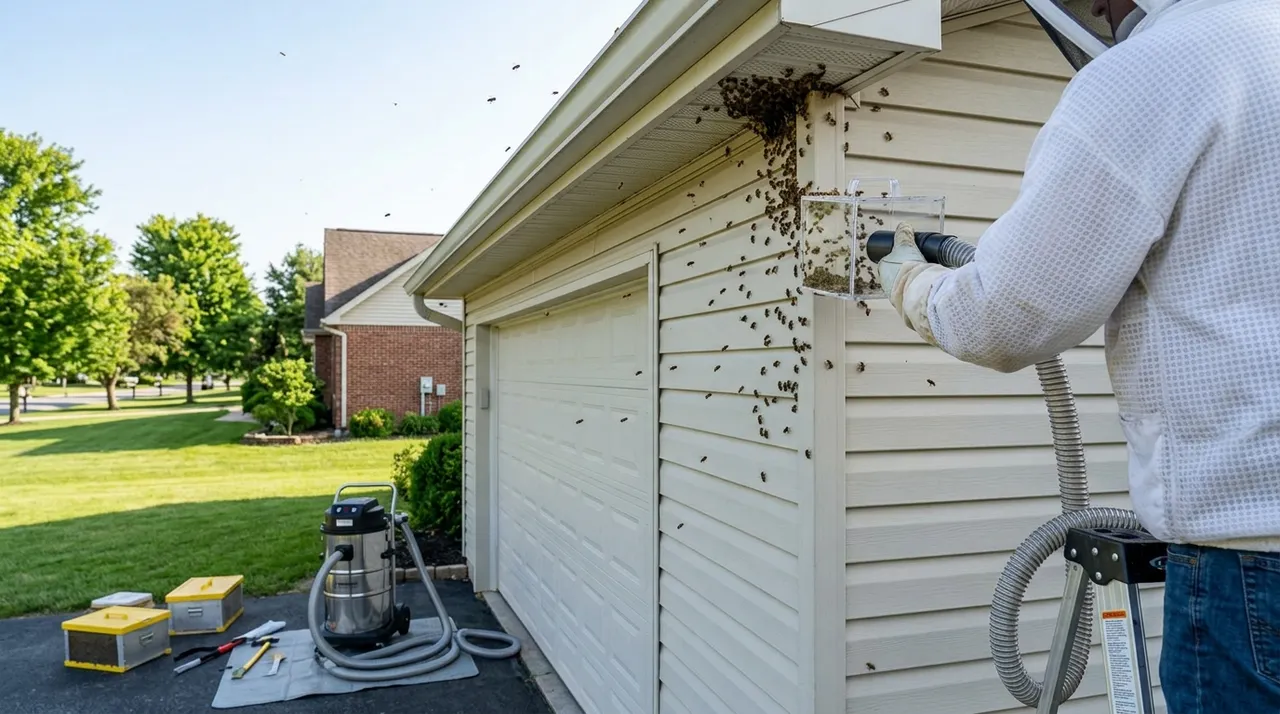
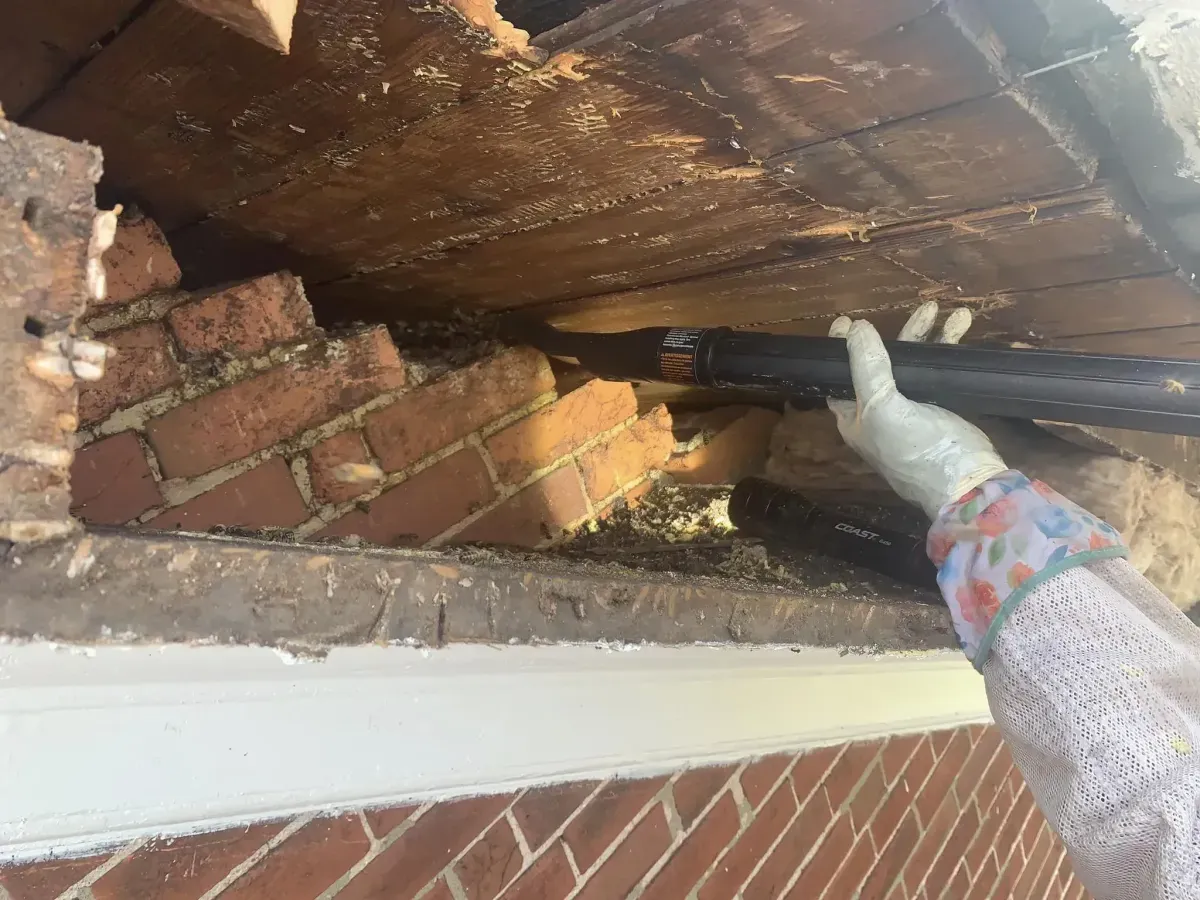
Extracting tens of thousands of defensive bees safely requires equipment built specifically for live honeybee handling. Standard shop vacuums have excessive suction and rigid hoses that crush bees against the walls of the canister, killing the colony in minutes.
Beekeeping removal specialists use purpose-built bee vacuums with adjustable low-pressure suction and smooth interior hoses. The vacuum pulls the flying and crawling bees into a specialized, ventilated catch box lined with soft baffles or wire mesh that cushions their landing. A technician adjusts the airflow so the bees slide into the holding box unharmed. Removing the bulk of the adult worker bees early in the process calms the remaining colony, improves visibility, and makes it significantly easier to work through the comb without accidentally crushing the queen.
Step 4: Finding the Queen and Harvesting the Comb
With the bulk of the field bees safely resting inside the catch box, the technician focuses on the delicate work of disassembling the hive structure. This stage requires patience and a gentle touch.
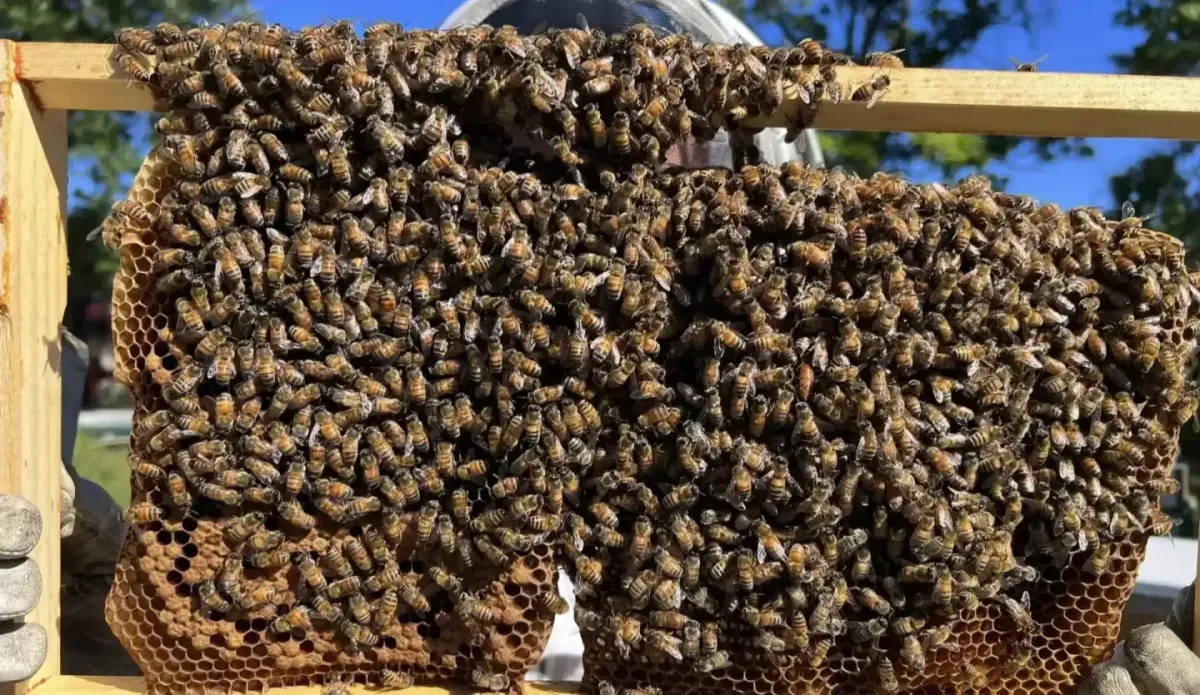
Each section of comb is cut away from the framing studs using long hive knives. The specialist sorts the comb into three categories: empty wax, honey stores, and brood comb containing eggs and growing larvae. Brood comb is carefully cut into rectangular slabs that fit inside standard wooden Langstroth hive frames. Technicians secure these pieces into the frames using large rubber bands. The bees will later chew through the rubber bands and cement the comb permanently to the wooden frames with propolis.
Throughout this process, the technician watches intently for the queen. She is slightly longer and thinner than worker bees, with a smooth, amber abdomen. Locating the queen is essential. If the queen is secured in a protective queen cage and placed inside the transport hive, any remaining bees will naturally follow her pheromone scent into the box. If the queen is missed or killed, the surviving bees will struggle to rebuild, and stragglers will cluster aimlessly around the cut-out site for days.
Step 5: Relocating the Colony to a Safe Apiary
Live removal does not end when the bees leave your wall. A responsible operator ensures the colony survives and thrives long after the extraction is complete.
The technician packs the catch box, the framed brood, and the caged queen into a secure transport setup and brings them to an established apiary. Relocating the hive is the defining step of a true bee relocation service in Gilbertsville, giving the insects a protected environment where they can build comb and forage naturally without causing property hazards. At the apiary, the bees are transferred into a permanent wooden hive box. The technician introduces supplemental sugar syrup to help them rebuild their wax comb and monitors the hive for health and queen acceptance. Rescuing these colonies supports local pollination and protects valuable honeybee genetics across eastern Pennsylvania.
Step 6: Pheromone Removal and Cavity Sanitation
Removing the bees and comb is only half the job. If the empty wall void is not cleaned and treated properly, a new swarm will move into the exact same spot next spring.
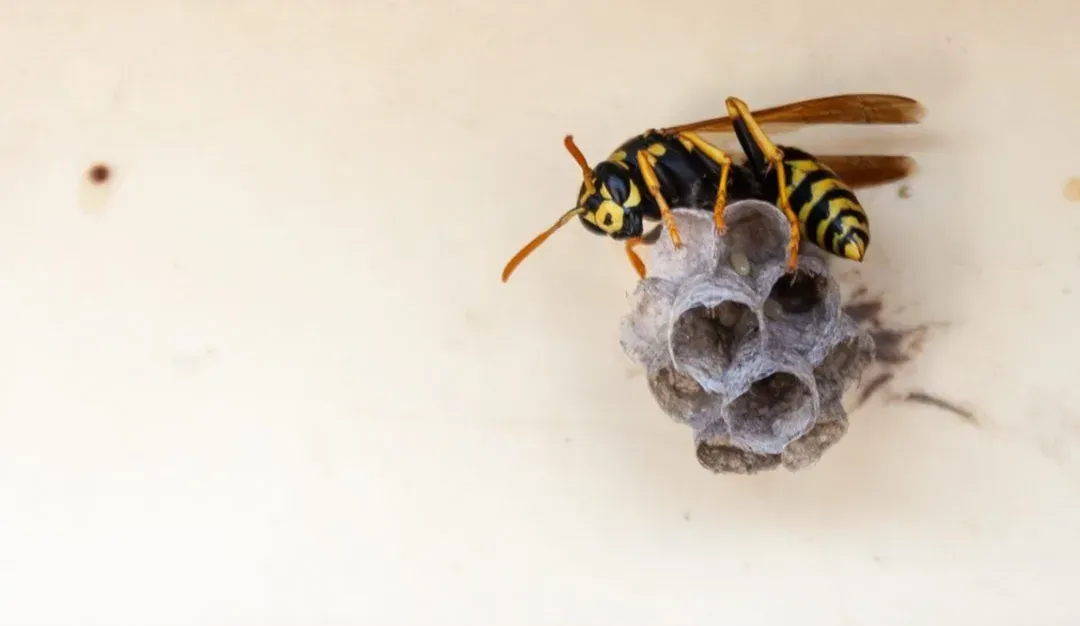
Honeybees communicate heavily through chemical signals. Wax, propolis, and alarm pheromones leave an unmistakable scent trail impregnated into wooden studs and sheathing. Scout bees from other colonies can smell this residue from hundreds of yards away. After extracting the comb, the technician scrapes down the wooden framing to remove every trace of wax and propolis. The entire cavity is scrubbed with an enzyme-based cleaner or odor-neutralizing wash to break down the lingering pheromones.
Next, the technician fills the empty void with dense insulation, such as fiberglass or expanding foam. Honeybees cannot build comb in a cavity packed solid with insulation. By eliminating the void, you remove the physical real estate that made your home attractive to the bees in the first place.
Step 7: Closing the Void and Structural Restoration
Once the cavity is sanitized and insulated, the structure must be professionally sealed and repaired. Leaving a hole in your siding or unfinished drywall creates an open invitation for water infiltration, mold, and secondary pests.
Because honeybee cut-outs require both carpentry skills and apicultural knowledge, the team at Honeybee Rescue Company handles the structural repairs directly after completing the extraction. Ty Kelius and Alyssa Kelius built our family-owned business to give homeowners a complete solution, combining years of beekeeping field experience with licensed contracting craftsmanship. We replace the exterior sheathing, reinstall the siding, match paint, or patch and sand interior drywall so your wall looks as good as it did before the bees arrived. We are fully licensed and insured, operating under PA#105107, as well as bonded, GreenPro Certified, QualityPro Certified, and a Termidor Certified Professional. Every entry point, knot hole, and trim joint on the exterior is sealed with silicone caulk or stainless-steel wire mesh to ensure no future pests find a way inside.
Variables That Determine Honeybee Removal Costs
Homeowners often want a flat price over the phone, but no two live bee extractions are identical. What you will pay for professional removal depends on several physical factors that can only be evaluated through an on-site inspection.
The primary cost drivers include:
- Accessibility and height: A ground-level cut-out on a first-floor living room wall is straightforward. A hive located thirty feet up in a third-story soffit requires scaffolding, ladder safety gear, or lift equipment, which increases labor time.
- Hive age and size: A swarm that moved into your wall two days ago has not built comb yet and can often be removed quickly. A hive that has been established for two years may contain eighty pounds of honey, six feet of comb, and 50,000 bees, requiring extensive labor to extract and clean.
- Construction materials: Cutting into drywall or vinyl siding is quick and easy to patch. Removing cedar shake, brick mortar, stone, or historic plaster requires specialized tools and significantly more time.
- Scope of repair: Simple patch work costs less than replacing custom exterior siding panels or repainting an entire room.
Because each structure presents distinct challenges, an honest contractor will not guess at pricing before seeing the job. Scheduling an on-site inspection is the only reliable way to get an accurate quote for your specific property.
Pennsylvania Honeybee Seasons and Local Building Guidelines
In southeastern Pennsylvania, honeybee activity follows a distinct seasonal rhythm. Swarming season typically peaks between late April and early June. During this window, an established hive splits, and a swarm of 10,000 to 20,000 bees clusters temporarily on tree branches, fences, or porch railings while scouts hunt for a new home. If a scout finds an unsealed gap in your Gilbertsville home during these weeks, the swarm can take up residence within hours.
Addressing the issue early in the season saves money and prevents damage. A fresh swarm has minimal comb, making removal fast and clean. By late August or September, that same colony will have packed the wall void with winter honey stores, dramatically expanding the scope of the cut-out.
When planning structural repairs following a bee removal, property owners should also keep local building regulations in mind. Building permits and inspection requirements for exterior structural work vary across Montgomery County townships, so check with your local municipal office before starting. Working with a registered, insured contractor ensures all framing modifications and weather barriers meet local standards.
Protect Your Home and the Bees
Discovering honeybees in your walls can feel overwhelming, but you do not need to choose between saving the bees and protecting your house. Professional live bee removal provides a humane, permanent solution that safely relocates the insects to a working apiary while restoring your property to sound condition.
If you hear buzzing in your walls or spot bees flying into your siding in Gilbertsville, act before the colony builds pounds of heavy honeycomb. Reach out to Ty and Alyssa Kelius and the team at Honeybee Rescue Company today. Contact us through our website form or call (610) 822-2788 to schedule an on-site consultation and quote for your home.
Common Questions
Frequently Asked Questions
Ready To Start?
Get Your Quote Today
Get a quote from Honeybee Rescue Company — serving Gilbertsville and surrounding areas.