Can Yellow Jackets Chew Through Drywall in Gilbertsville, PA?
Protect your home from aggressive wall void infestations.
The Short Answer
Yes, yellow jackets can absolutely chew through drywall. When a colony builds a nest inside a wall void, they scrape away the drywall to make room for their expanding hive. Eventually, they thin the wall down to a fragile layer of paint before breaking directly into your living space. Never seal their outside entry point or press on a bubbling wall.
Late summer in Montgomery County brings a specific kind of structural panic. You are sitting in your living room and notice a faint, rhythmic crackling sound coming from behind the paint. Then, a soft, brown-stained bubble appears on the surface. That sound is thousands of yellow jacket mandibles chewing through your drywall. For many homeowners, discovering that stinging pests are actively dismantling their house from the inside out is a terrifying moment. Understanding the biology behind this behavior is the first step in regaining control of your property.
Why Stinging Insects Move Into Your Walls
Yellow jackets do not eat your house for food. They are cavity nesters by nature. In the wild, they look for abandoned rodent burrows or hollow tree trunks to establish their colonies. But residential neighborhoods provide perfect artificial cavities in the form of wall voids, soffits, and attic spaces.
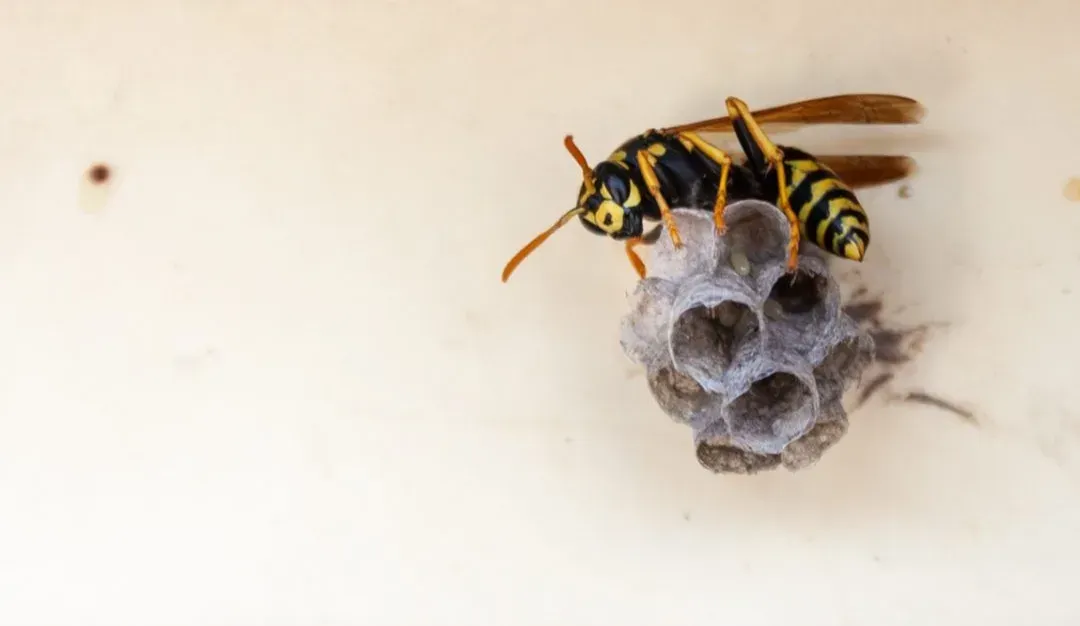
In the early spring, a single fertilized queen emerges from hibernation. She flies around looking for a safe, warm place to start her new family. She might find a missing piece of siding, an unsealed utility pipe penetration, or an open foundation weep hole. She crawls inside, builds a small paper nest the size of a golf ball, and lays her first eggs.
For the first few months, the nest is completely unnoticeable. The queen raises the first batch of workers, and those workers take over the foraging and building duties. As the temperatures rise through June and July, the population multiplies rapidly. By August, that small golf ball has turned into a massive paper envelope filling the entire stud bay. This explosive growth is exactly where the structural problems begin.
The Mechanics of Drywall Excavation
To understand why yellow jackets chew through your walls, you have to look at how a house is built. Drywall is incredibly soft. It consists of nothing more than compressed gypsum dust sandwiched between two layers of heavy paper. Wasps already use their powerful mandibles to scrape wood fibers from fences and dead trees, which they mix with their saliva to manufacture the paper for their nests. Chewing through gypsum is effortless for them.
When the nest hits the boundaries of the wooden wall studs, the wasps need more room to build additional comb layers. They begin stripping away the paper backing on the inside of the wall cavity. Then, they use their saliva to soften the hard gypsum, excavating it bit by bit and carrying it out of the nest.
The interior paint on your living room wall changes everything. Modern latex paint is highly elastic and rubbery. It does not feel like natural wood or paper fiber, so the wasps usually stop chewing when they reach it. The result is a terrifying structural failure. The solid drywall is completely gone, replaced by a paper-thin membrane of paint that bubbles outward from the pressure of the nest. At this stage, the slightest bump will tear the paint and release the colony into your home.
Recognizing the Warning Signs
Because the nest is hidden, homeowners usually hear the infestation long before they see it. The sounds are distinct but easily misinterpreted. A common assumption is that a mouse has taken up residence in the wall. Rodents create heavy thumping, scurrying, and scratching noises as they run up and down the framing.
Wasps sound entirely different. Thousands of insects moving simultaneously create a constant, low-level vibration. If you press your ear to the wall, you will hear a distinct crackling sound. It mimics the noise of someone slowly rolling up a sheet of cellophane or crumpling dry leaves. You might also hear a rhythmic tapping as the workers physically scrape the drywall away.
Visual clues follow shortly after the noise begins. A faint brown or yellow moisture stain might appear on the ceiling or wall. This discoloration comes from the sheer volume of insect waste and moisture generated by the colony. Eventually, you will see the wall surface warp or bubble.
If you spot a soft area on your wall, the most important rule is simple. Do not push on it. The paint is extremely fragile. Poking the spot will break the seal, and the wasps will immediately flood into the room to defend their queen.
The Do-It-Yourself Mistake You Must Avoid
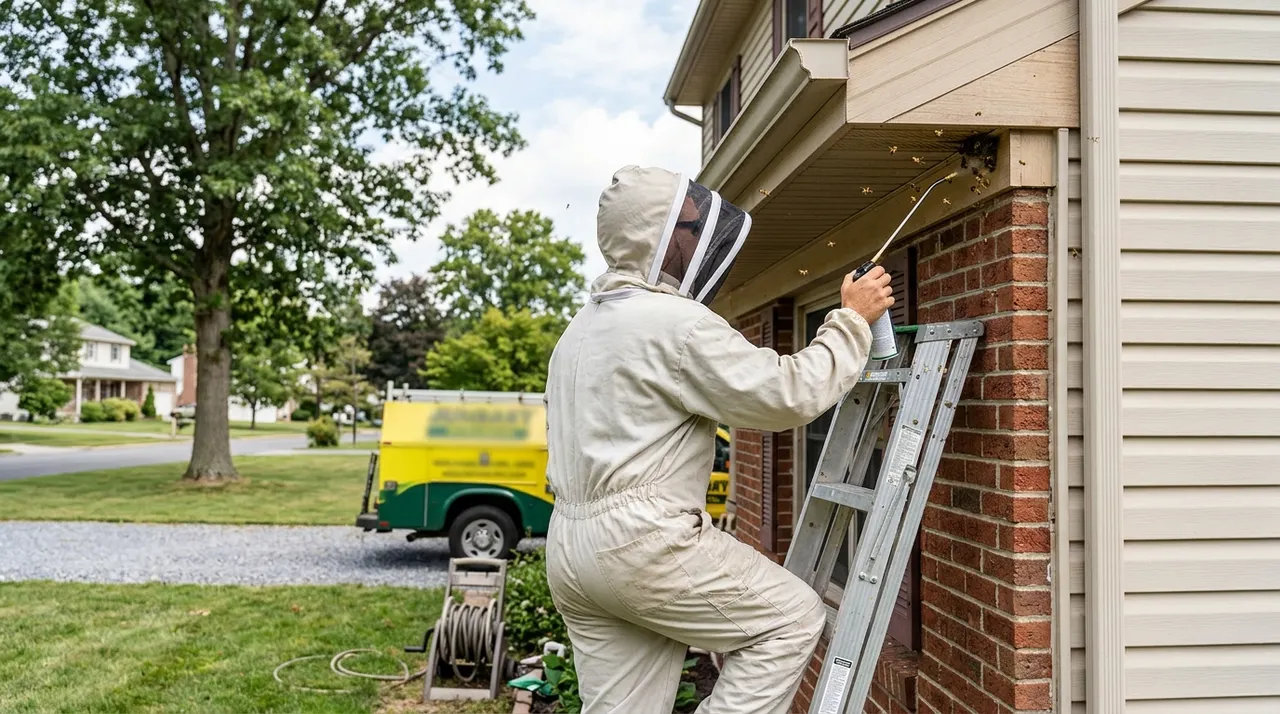
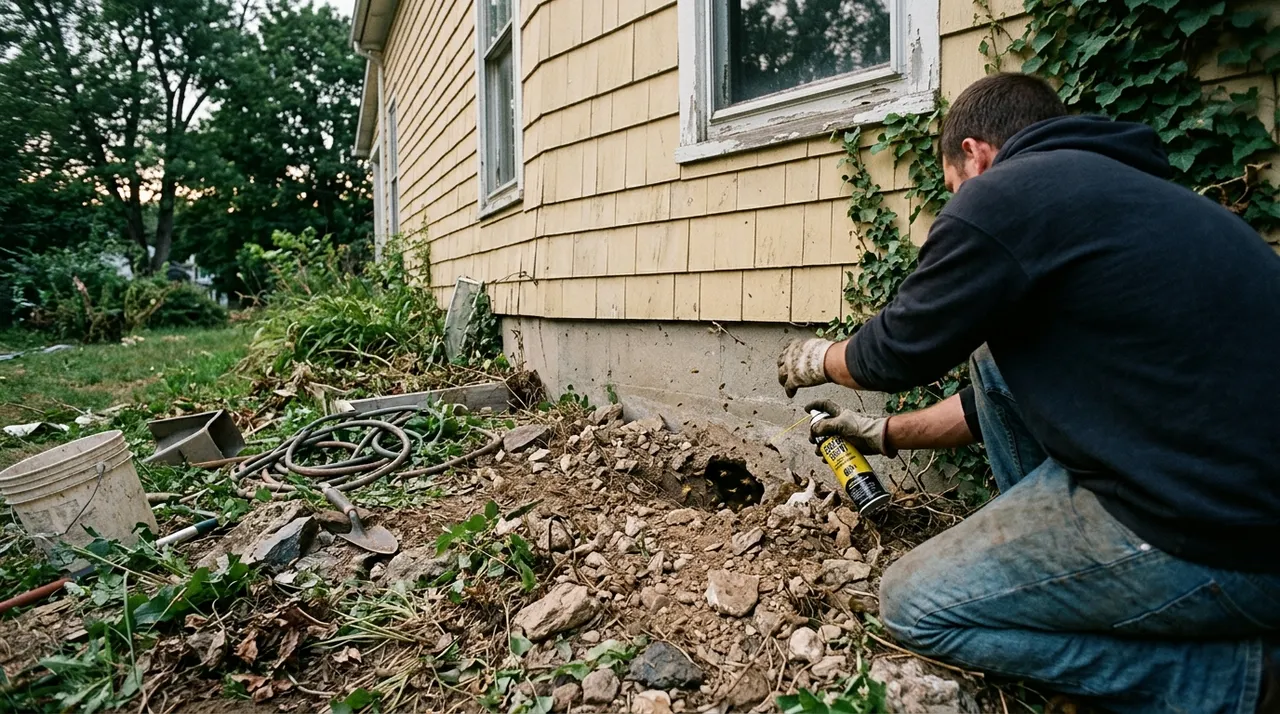
Many Gilbertsville homeowners try to solve the problem themselves. They walk outside, watch the wasps flying in and out of a gap by the window, and grab a tube of expanding foam. Sealing the exterior entry hole seems like a logical fix. It is actually the most dangerous mistake you can make.
When you block the outside exit, you trap returning foragers in your yard. They will swarm aggressively around the sealed hole and sting anyone who walks too close. Inside the wall, the situation is much worse. You have just trapped thousands of insects inside a confined space. They will panic and look for another way out.
Insects instinctively move toward airflow, light, and heat. Since the outside wall is sealed, they will follow the drafts leading into your temperature-controlled house. They will push right through that weakened layer of painted drywall. If the drywall holds, they will find the gaps around your recessed lighting fixtures, electrical outlets, and baseboards. By trying to keep them out, you force them directly into your bedroom or kitchen.
The Difference Between Honeybees and Yellow Jackets
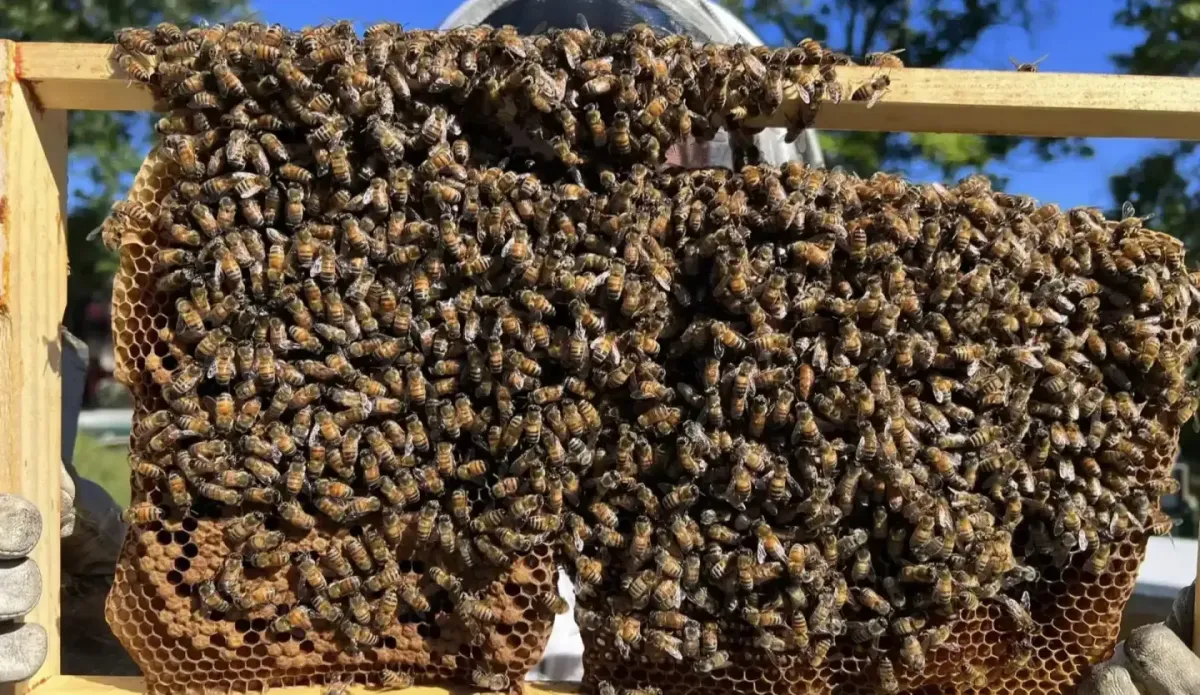
As professionals who handle both live bee rescue and wasp extermination, we see major differences in how these insects damage a house. Honeybees build heavy wax combs and store massive amounts of honey. When a honeybee colony moves into a wall, the primary risk is structural rot from melting wax and leaking honey.
Yellow jackets do not store honey. Their nests are made of dry, lightweight paper. The danger they present is entirely physical. They are highly defensive, easily provoked, and capable of stinging repeatedly without dying. According to the Penn State Extension, Eastern yellow jackets usually nest in the ground, but in populated areas, they frequently adapt to nesting inside structural wall voids. When they do, their aggressive excavation habits pose an immediate physical threat to your family.
How We Extract Nests and Rebuild Walls
When a nest reaches this critical size, spraying a can of hardware store bug killer at the siding will not solve the problem. A standard pest control service in Gilbertsville might just dust the entry hole and walk away. That approach leaves a massive paper nest full of dead insects and unhatched larvae rotting inside your wall. Over time, that decaying organic matter will smell terrible and attract secondary pests like carpet beetles.
You need the physical nest removed. We built our company to handle this kind of structural extraction, and we know residential framing inside and out. The exact perimeter of the nest is typically tracked using specialized equipment. Physical containment barriers can be set up inside the home to ensure no stray insects escape into the living space. Wearing full protective suits, we open the cavity, extract the live colony, and vacuum the area completely clean.
Because we operate under a Pennsylvania contractor license (PA#105107), we do not leave you with a gaping hole in your living room. We sanitize the stud bay and completely reconstruct the drywall and trim ourselves. You never have to coordinate with a secondary carpenter to put your house back together.
What Influences the Cost of Extraction
Pricing an extraction involves several moving parts. Every house is built differently, and every infestation is unique. The primary factor is accessibility. A nest located at ground level inside a first-floor living room wall is straightforward to reach. A colony wedged into a steep second-story roofline requires scaffolding, specialized safety gear, and significantly more time to safely access.
The size of the nest also dictates how much drywall or exterior siding we have to cut away and subsequently rebuild. Because the required labor and materials vary so much from property to property, we cannot provide accurate flat rates over the phone. We conduct an onsite evaluation to see exactly what we are dealing with before proposing a clear plan.
Keeping Stinging Pests Out Next Season
Once your home is restored, the goal is to keep new queens from moving in next spring. Inspect the exterior of your property carefully. Look for missing siding panels, dried and cracked weather stripping, and gaps where plumbing pipes enter the house. Cover your attic gable vents and foundation weep holes with fine metal hardware cloth. This simple step preserves your home's necessary ventilation while blocking any queens looking for a new cavity.
Schedule a Consultation for Your Property
If you hear continuous scratching in your walls or see aggressive wasps congregating around your siding, do not wait for them to break through into your living space. Reach out to the team at Honeybee Rescue Company. We handle the complete process, from the initial assessment to the specialized yellow jacket extraction and repair. Contact us today to request an estimate and get a safe, effective plan to protect your home.
Common Questions
Frequently Asked Questions
Ready To Start?
Get Your Quote Today
Get a quote from Honeybee Rescue Company — serving Gilbertsville and surrounding areas.